Checking It Yourself
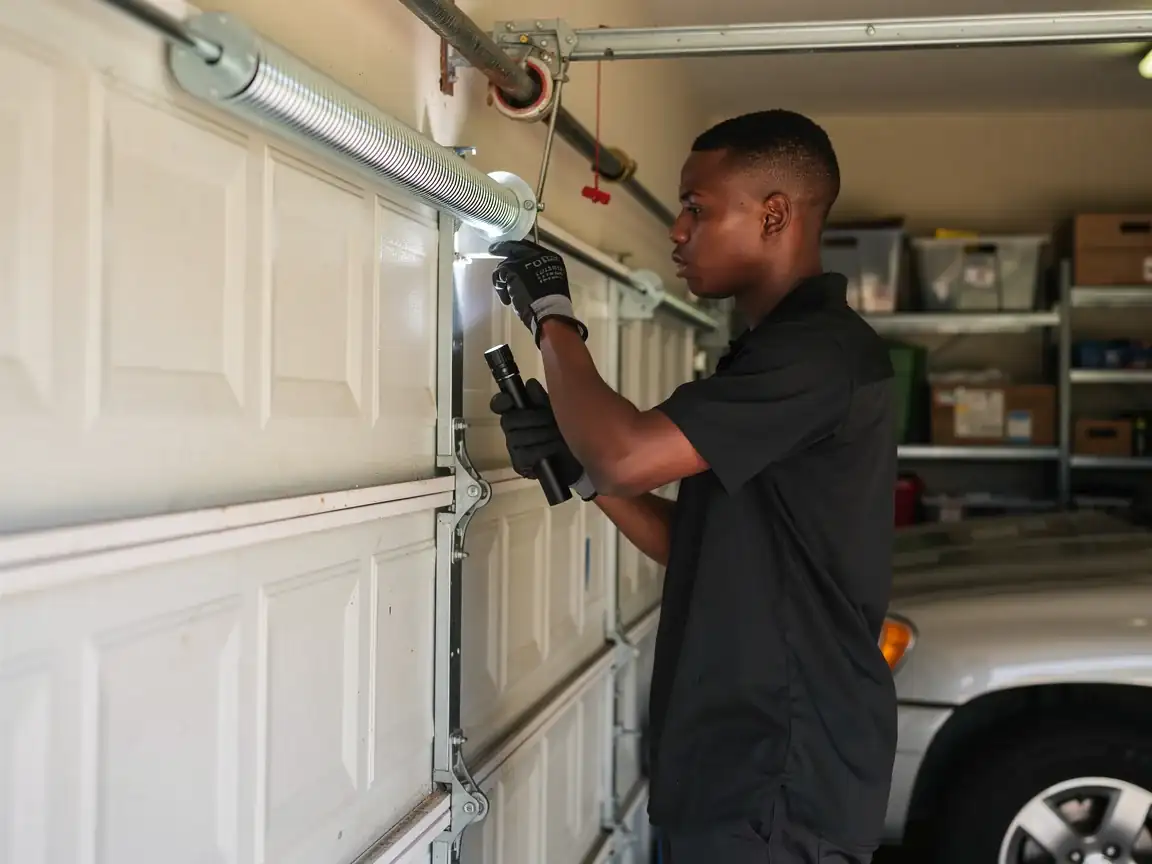
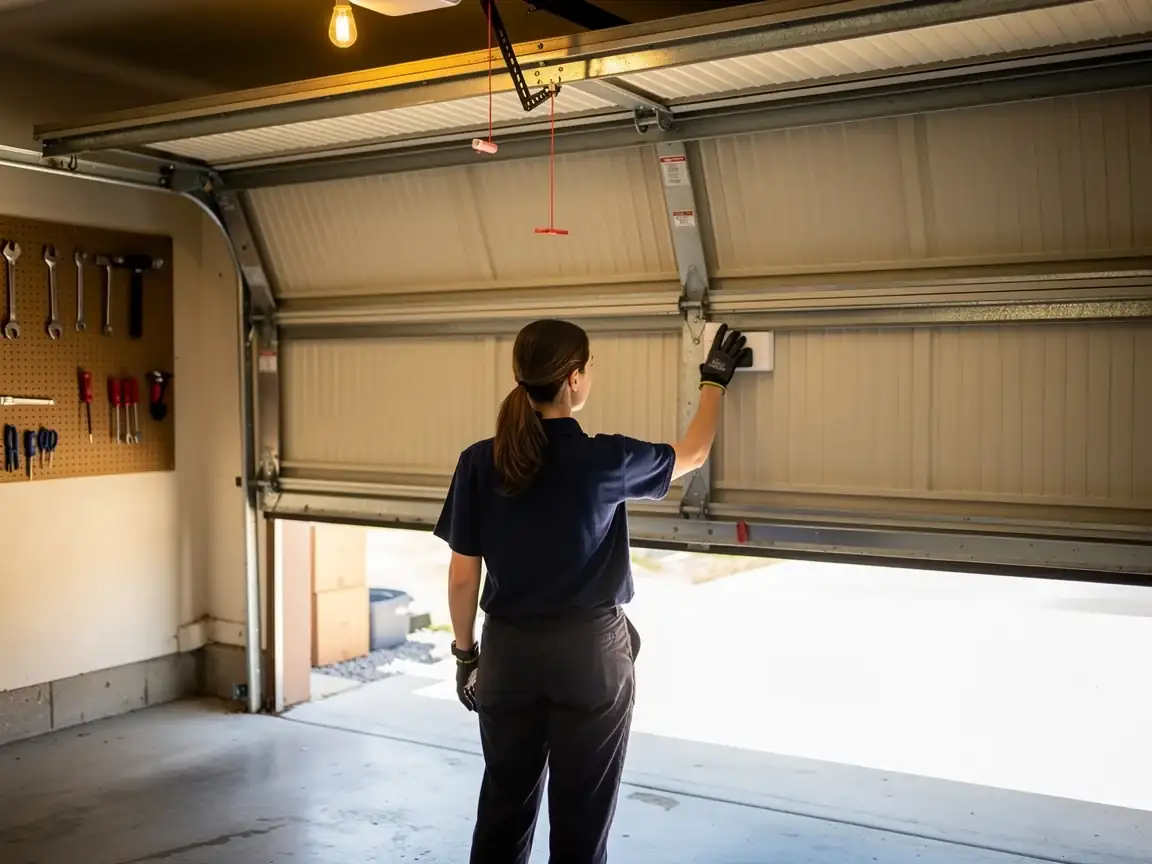
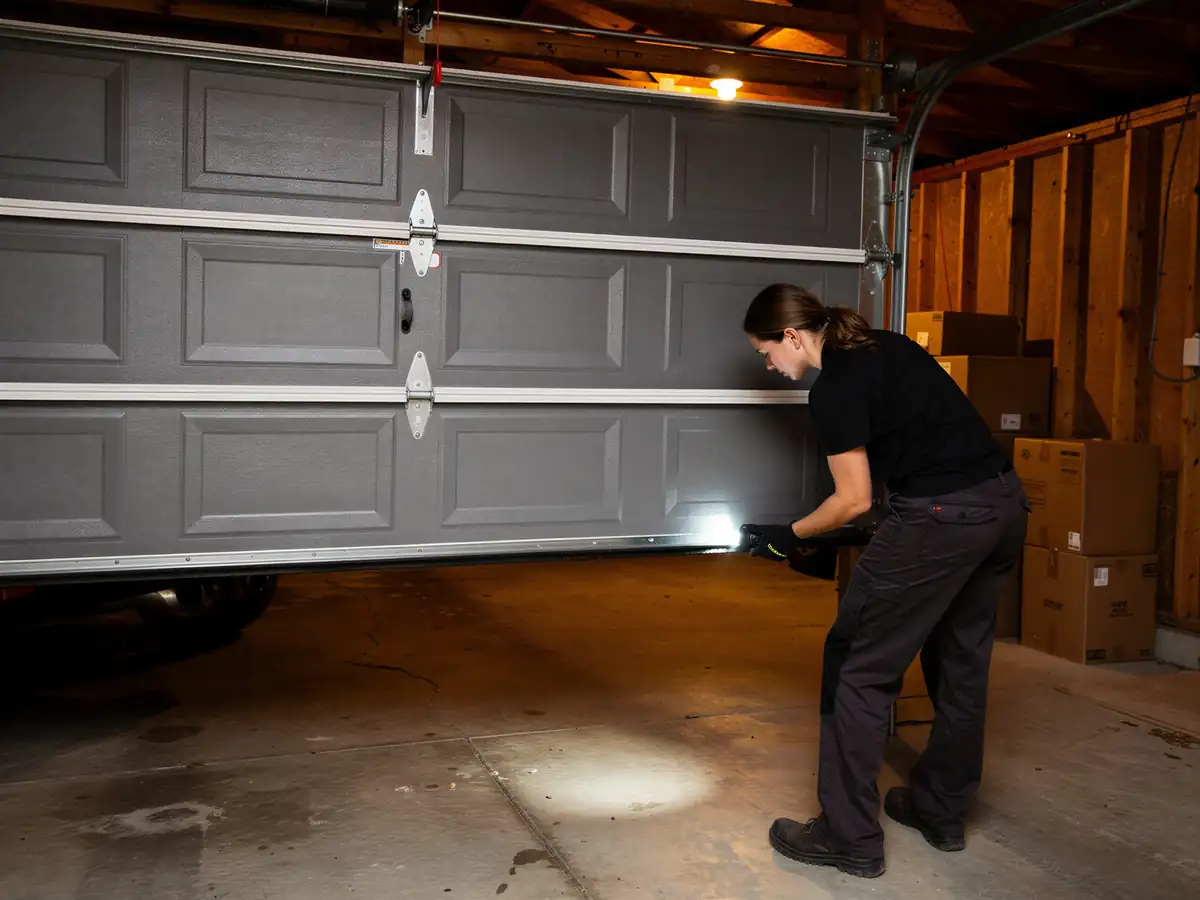
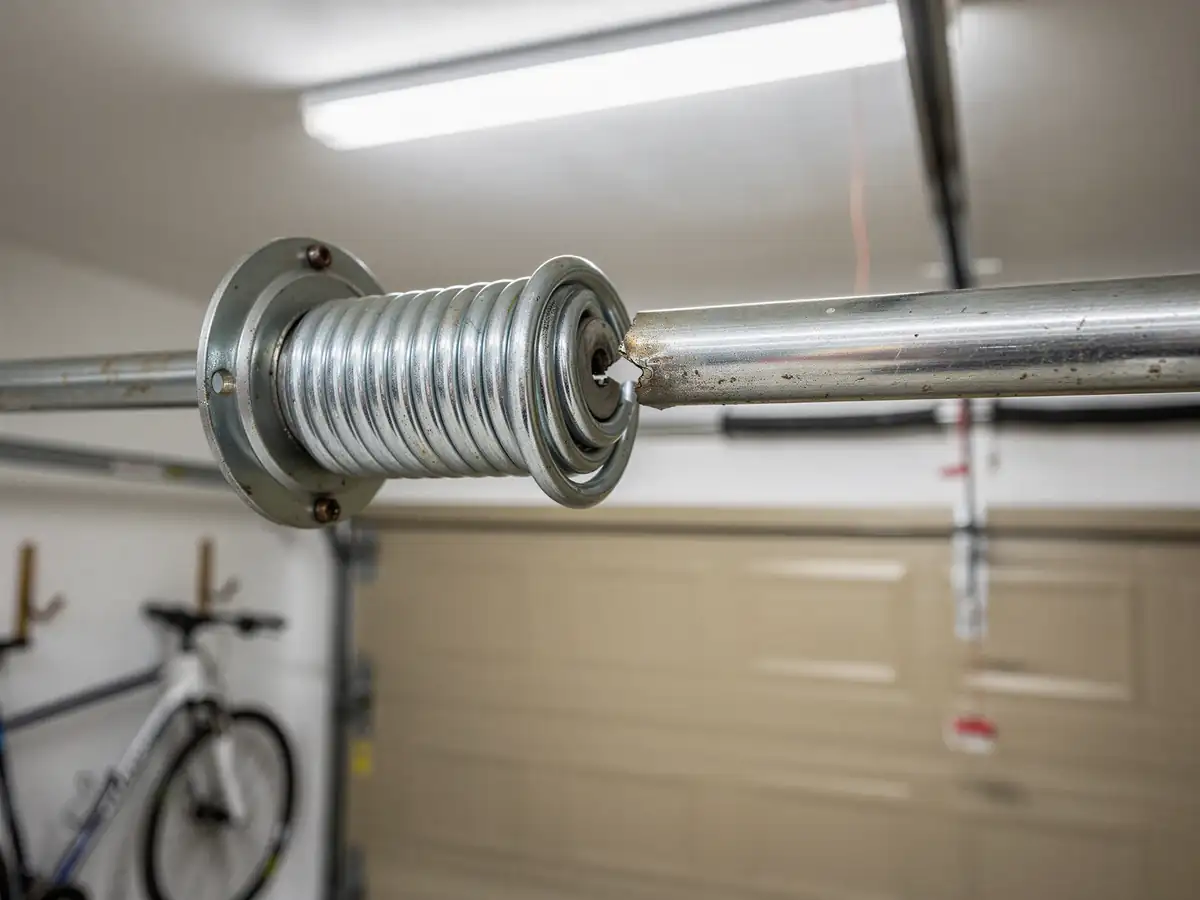
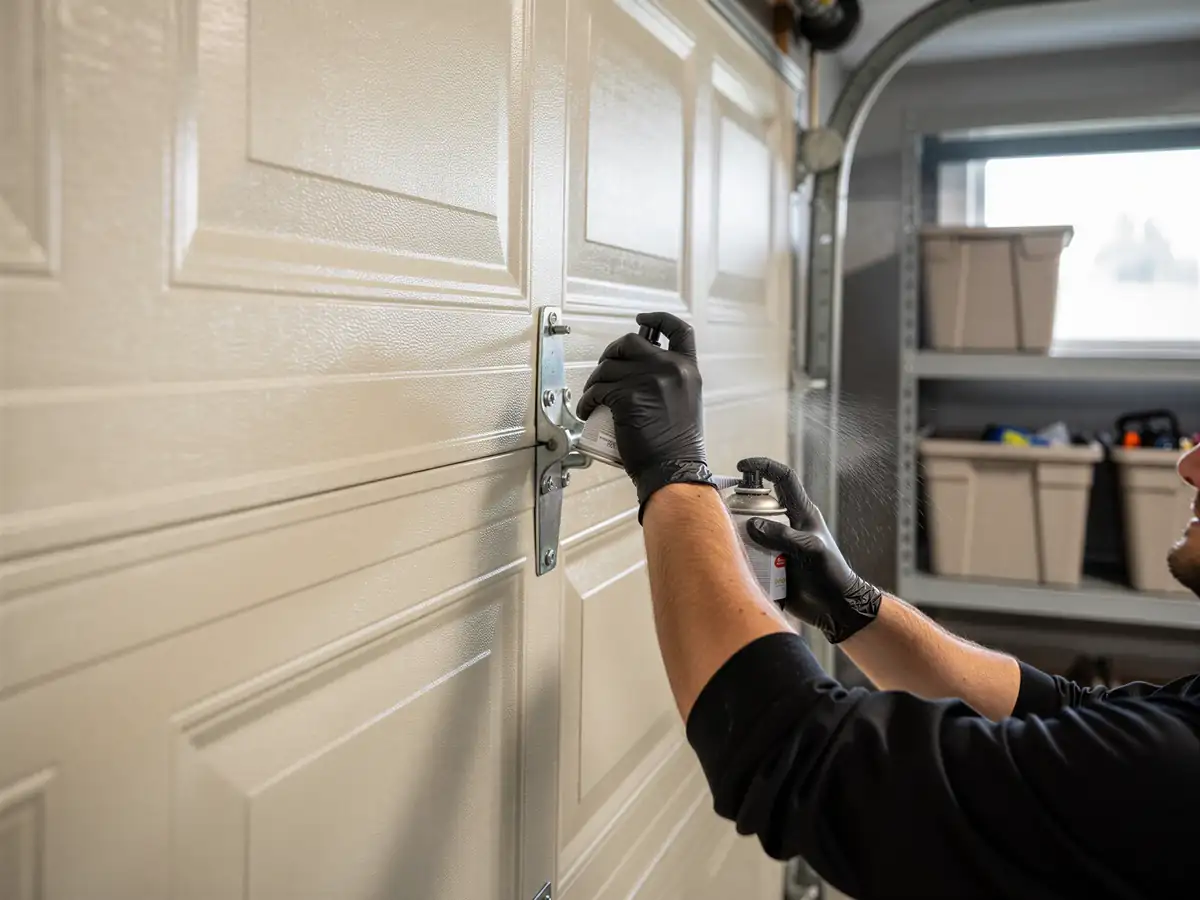
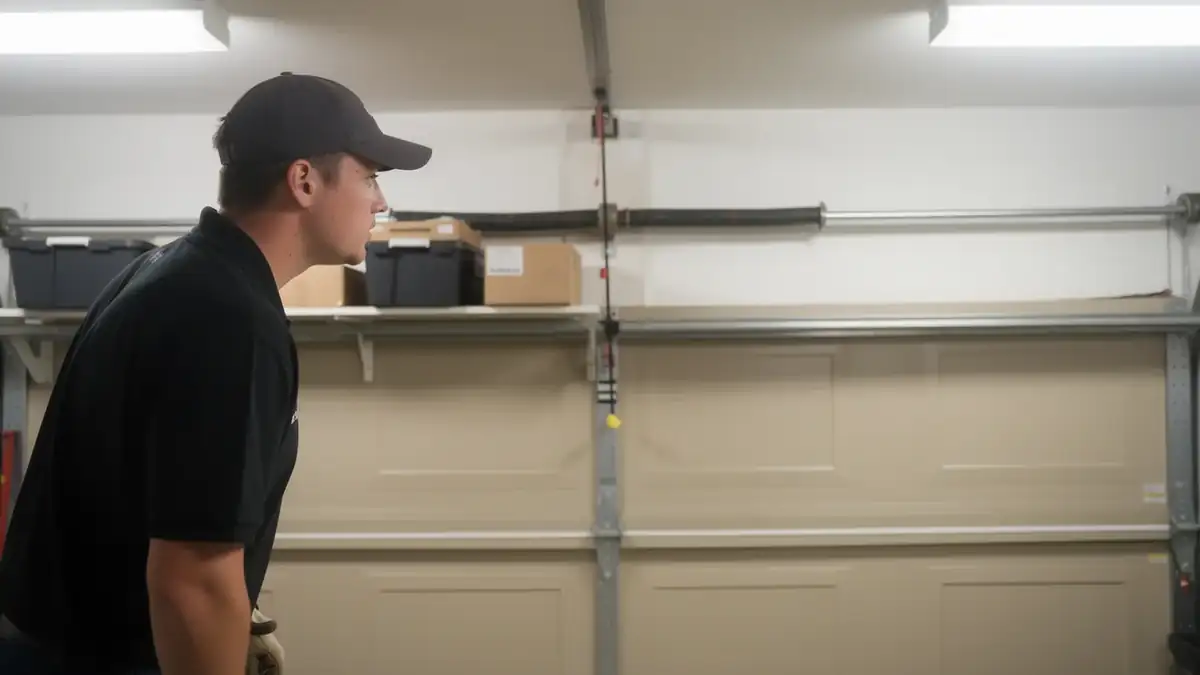
Before you call anyone, listen for where the sound starts. A squeal at the rollers usually means dry bearings - common on doors from the 1990s build wave that never got relubricated. A deep bang when the door closes is almost always a loose roller bracket or a track bolt that's worked free, not the opener. Rattling along the track near the top of the swing points to a bent track or a hinge pin wearing through, and in homes with hardware pushing 30 years old, worn hinge pins show up often enough that it's worth checking before anything else. Grinding from the motor head, not the door itself, usually means the opener's gear is failing - plastic gears common in openers from that era wear out faster than the metal ones used today. What you should not do is lubricate a torsion spring or touch it at all; it's under enough tension to cause real injury, and in this climate the spring is already working harder in winter. If the noise is loudest on the coldest mornings and quiets down by afternoon, that's the climate talking, and it's a sign the spring tension needs a look before it snaps rather than slips.
Season by Season
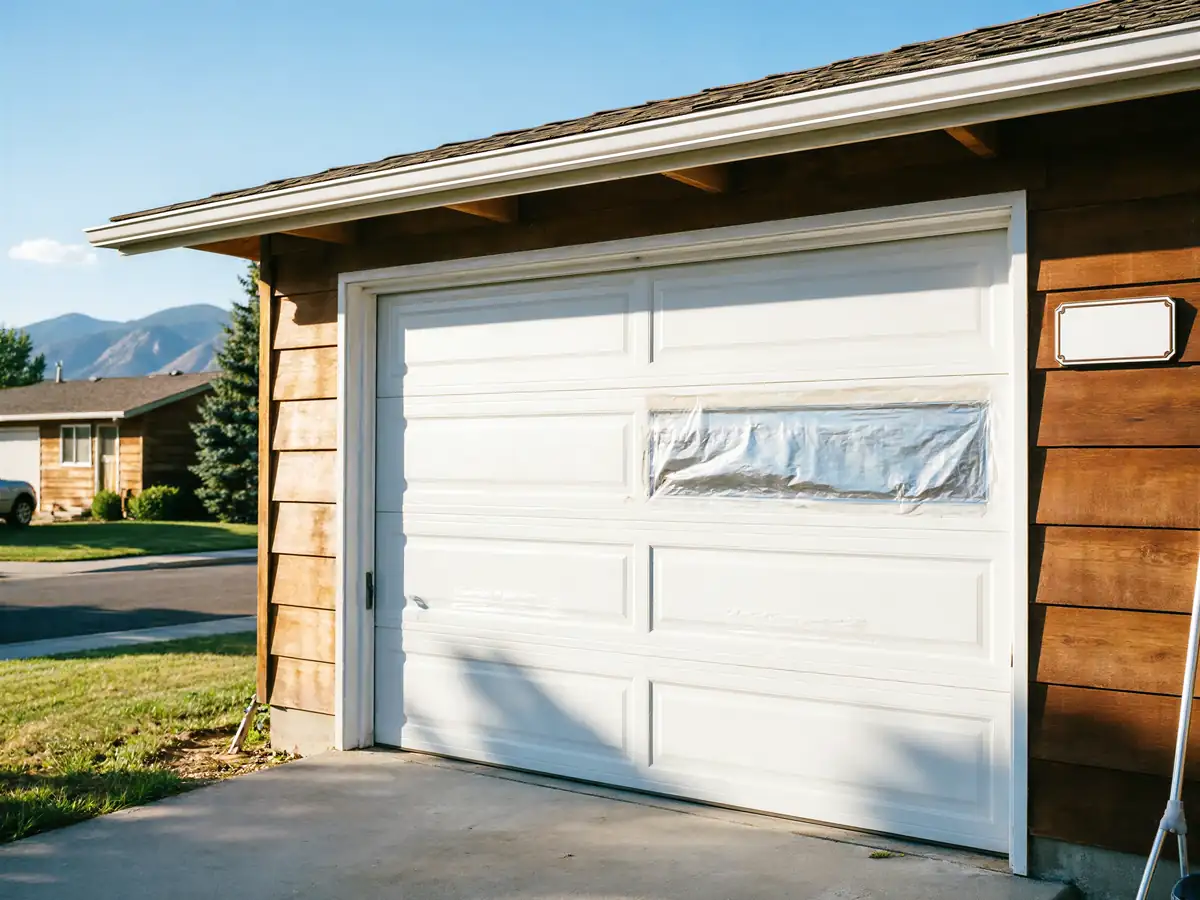
Winter here is the hard test for any door in the severe cold band this area sits in. Metal contracts, grease stiffens, and a spring that was already tired from 20-plus years of cycling will announce itself loudest on the coldest mornings - a groan on the first open of the day that eases by the third or fourth cycle. That groan is wear, not weather; the cold just makes it audible. Spring and summer bring the opposite problem: as temperatures swing back up, a door that was fine all winter can suddenly bind or stick, especially on homes from the 1980s and '90s wave of construction that used thinner panel stock than what's built today. Fall is the quiet season - mild temperatures mask small problems, which is exactly why a noise that shows up in October and gets ignored becomes a stuck door in January. Across the service area, from South Jordan to Riverton to Taylorsville, the seasonal pattern is the same: the door tells you what it needs before it fails, usually months ahead, through sound.