How Local Conditions Play In
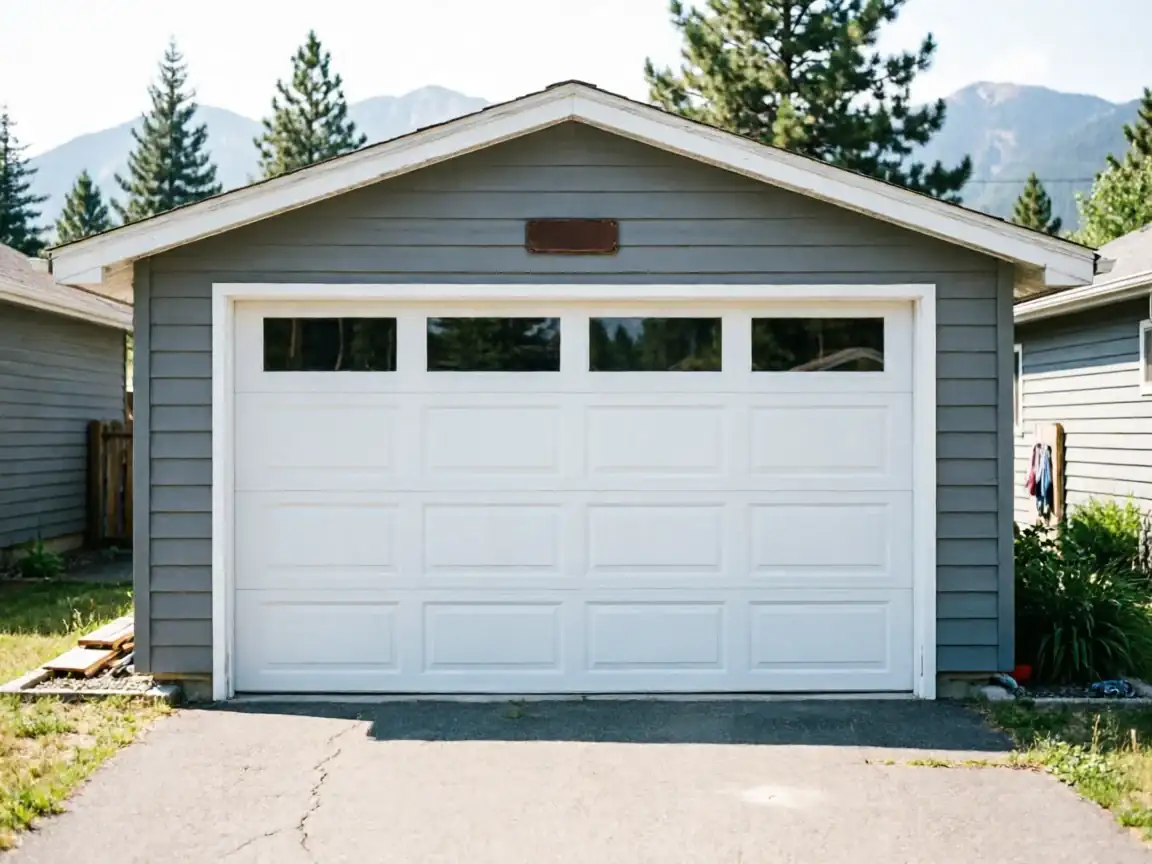
Most of the garages we work in around here went up somewhere between 1969 and 2012
With the heaviest concentration of houses dating to the 1980s and 90s. That matters for openers specifically: a chain-drive unit installed when a house was built in 1987 was never designed with battery backup in mind, because that wasn't standard equipment yet. Fast forward to a winter storm that knocks out power for a few hours, and a house with an opener from that era has no fallback - the door is stuck wherever it was when the lights went out.
We're in a cold-severe climate band here
Which means winter isn't a once-a-year inconvenience, it's a recurring stretch of weeks where grid stress and ice on lines both go up. That combination - older opener stock plus a climate that actually produces power cuts - is the reason this is worth thinking about before it happens, not after you're standing in a dark garage trying to find the manual release cord in the cold.
Checking It Yourself
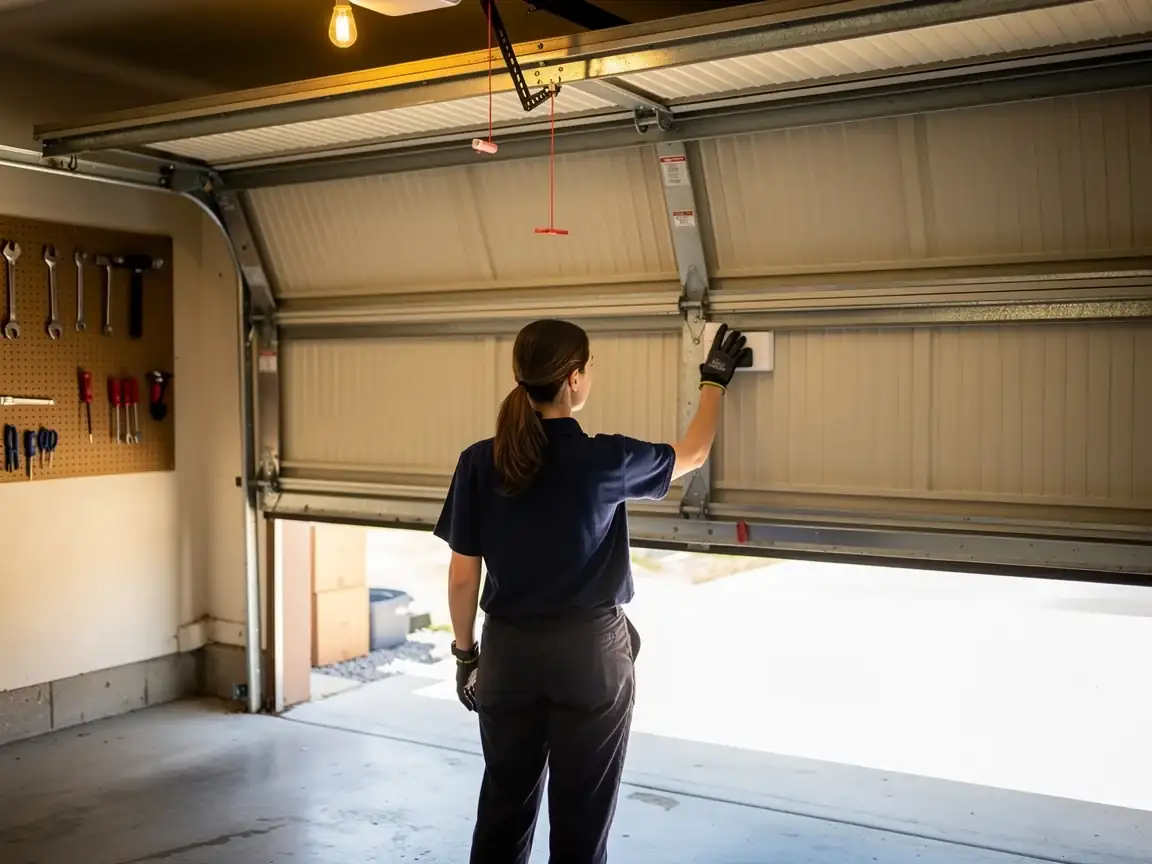
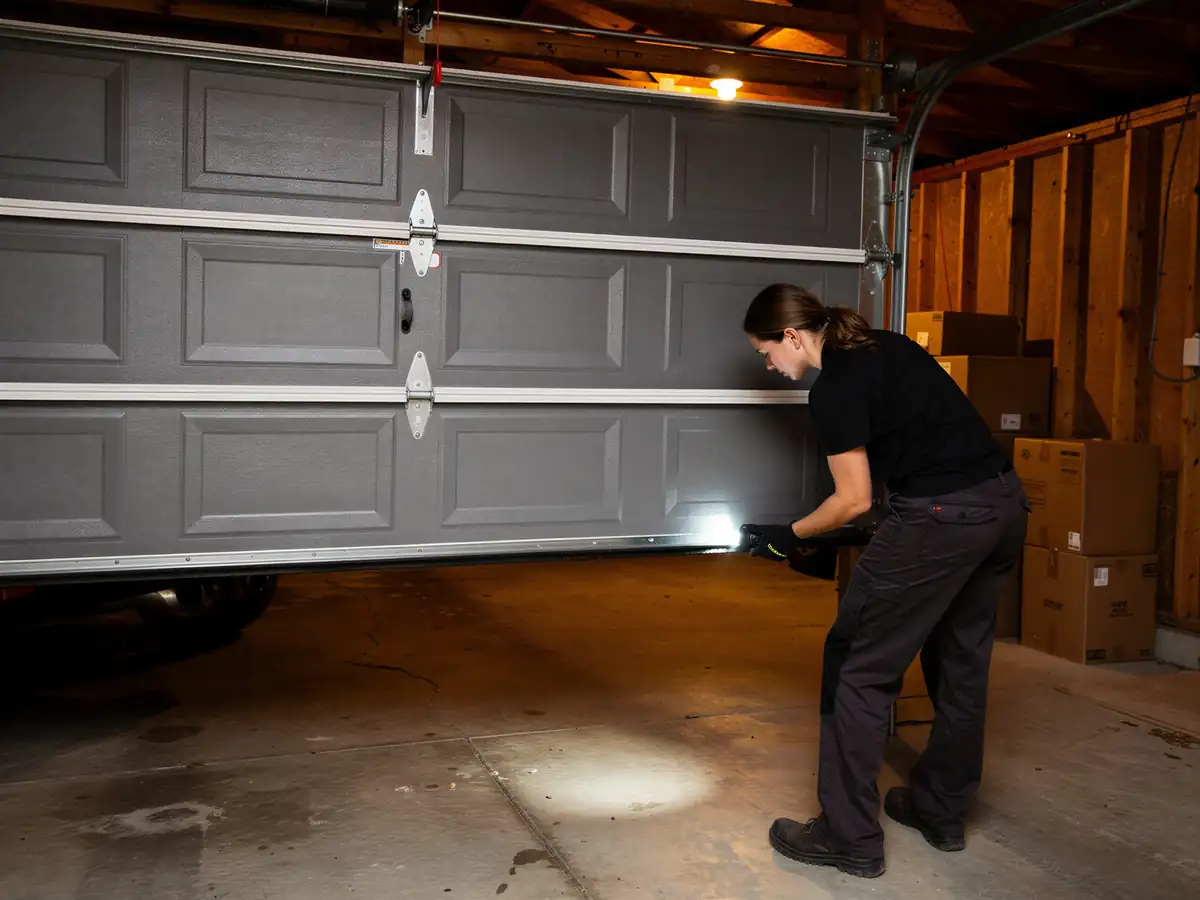
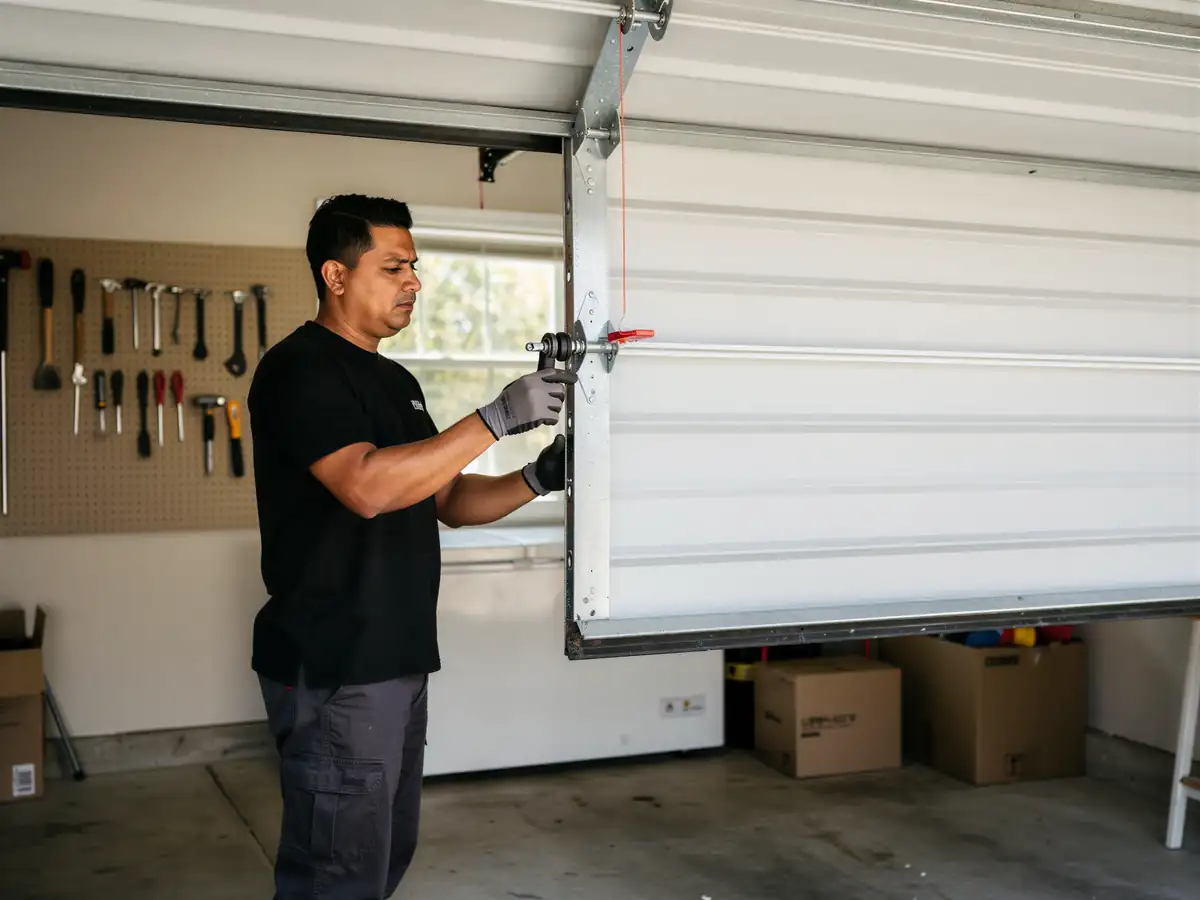
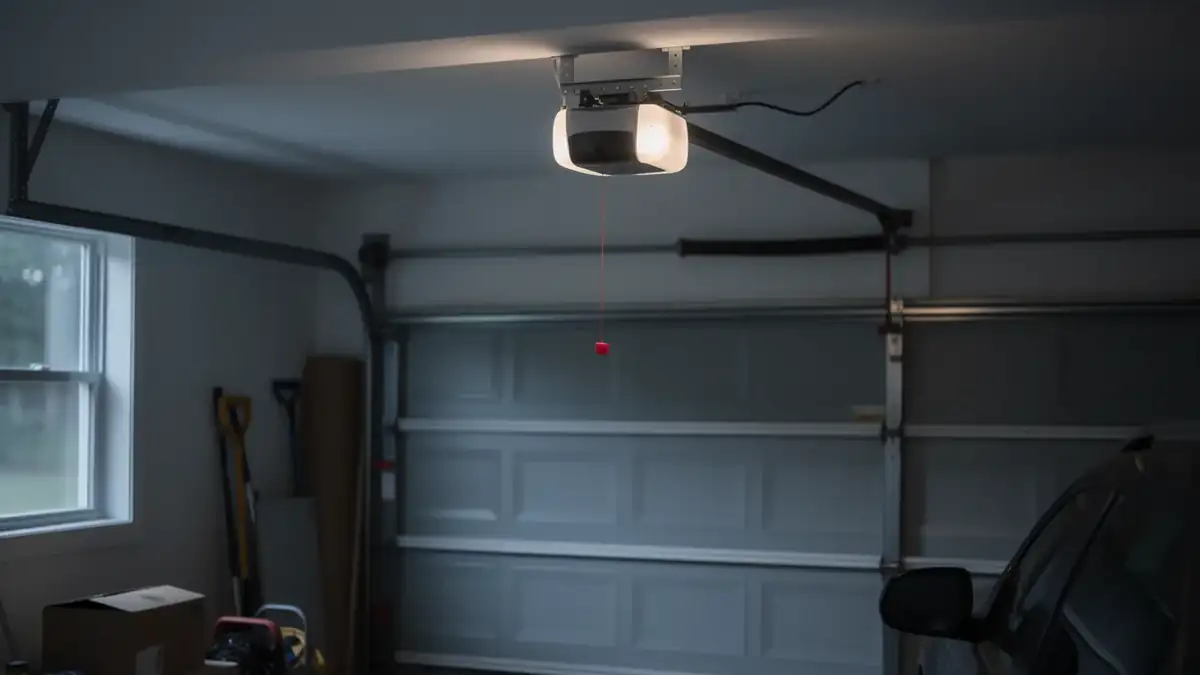
Find your manual release cord - the red handle hanging from a track near the opener head - and pull it once, now, while nothing is urgent. In a cold garage, an old release mechanism can stiffen up or the cord itself can get brittle, and you don't want to discover that mid-outage. If the door drops hard or won't release smoothly, that's worth a call rather than a workaround.
Next, look at the opener unit itself. If there's no battery pack attached to the housing (a small box, usually on the side), you don't have backup power - a straightforward thing to confirm but easy to assume otherwise. Houses built in the 1980s and 90s almost never came with this from the factory, since it wasn't common equipment until later. If your opener has been replaced since then, you may already have it; if it's original to a house from that era, you almost certainly don't.
Season by Season
Summer and fall are when we'd rather see you, honestly - that's when a battery backup unit or a release check is a planned job instead of an emergency one. Once winter sets in, power cuts tend to cluster with storms, and that's exactly when a stiff manual release or a dead opener battery turns into a problem at the worst possible time, usually when you're trying to get a car out before work.
Spring and early summer put different stress on the system - temperature swings affect lubrication on tracks and rollers more than they affect the opener itself, so that's a separate conversation. But for the opener and backup power question specifically, the cold months are when the gap between 'should work' and 'does work' shows up. If you're going to check your setup once a year, do it before the first hard freeze, not during it.
The Problem
The core issue is a mismatch
This is a cold-severe climate where outages happen, and a large share of the housing stock here - built mostly between the late 1960s and early 2010s, with the thickest band in the 80s and 90s - carries openers that predate battery backup as a standard feature. Nobody designed that combination on purpose; it's just what happens when a house ages and the opener either never gets replaced or gets swapped with the cheapest like-for-like unit.
Here's the honest limit
We can add battery backup to most newer opener models, but if your opener is old enough, the unit itself may not support a backup retrofit at all, and replacing the whole opener is the more honest answer than bolting on a battery that won't actually integrate with 30-year-old electronics. We'll tell you which situation you're in rather than sell you a part that won't do the job.