How Local Conditions Play In
Most homes in West Jordan went up between 1969 and 2012
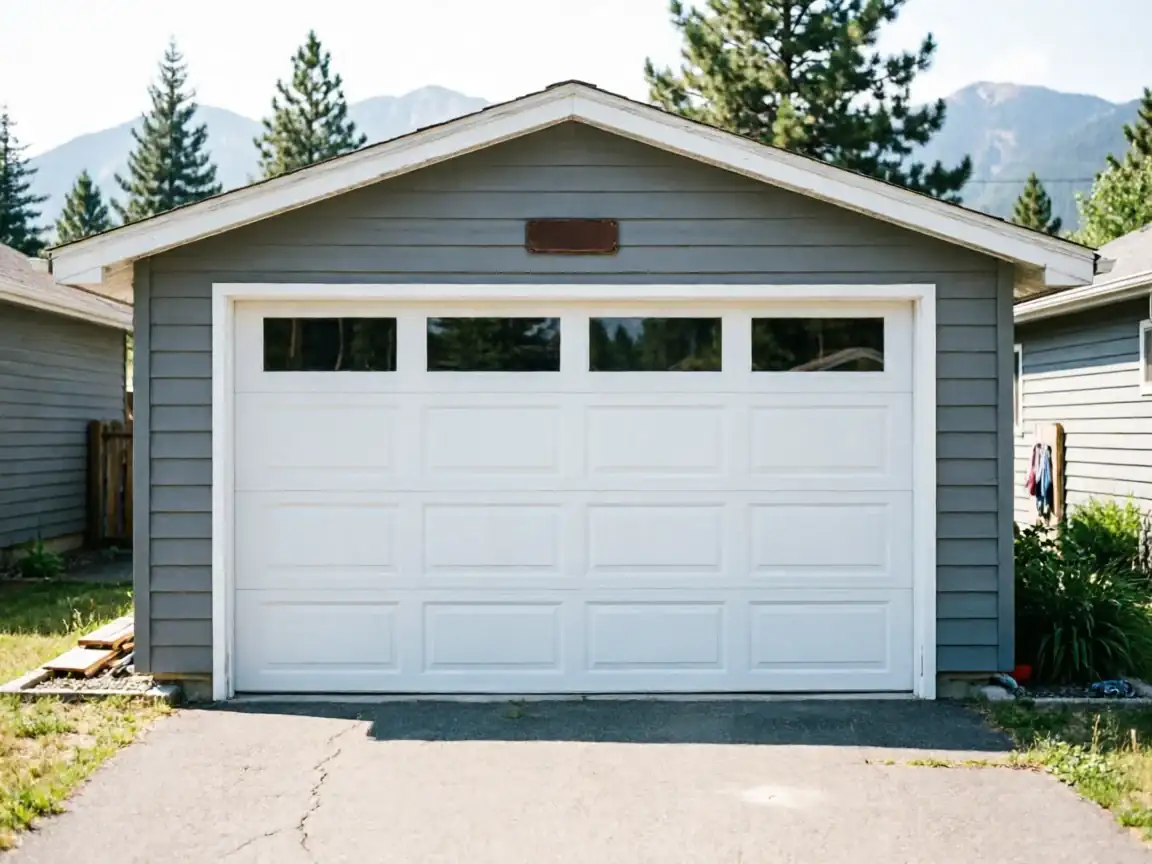
With the median build year sitting at 1999, so plenty of doors out there are original equipment from the Clinton years. Across the 27 named areas that make up this service area, from South Jordan to the older pockets near Taylorsville and Murray, the bulk of garage doors and openers date to that 1980s and 90s construction boom.
That matters because West Jordan sits in a cold-severe climate band
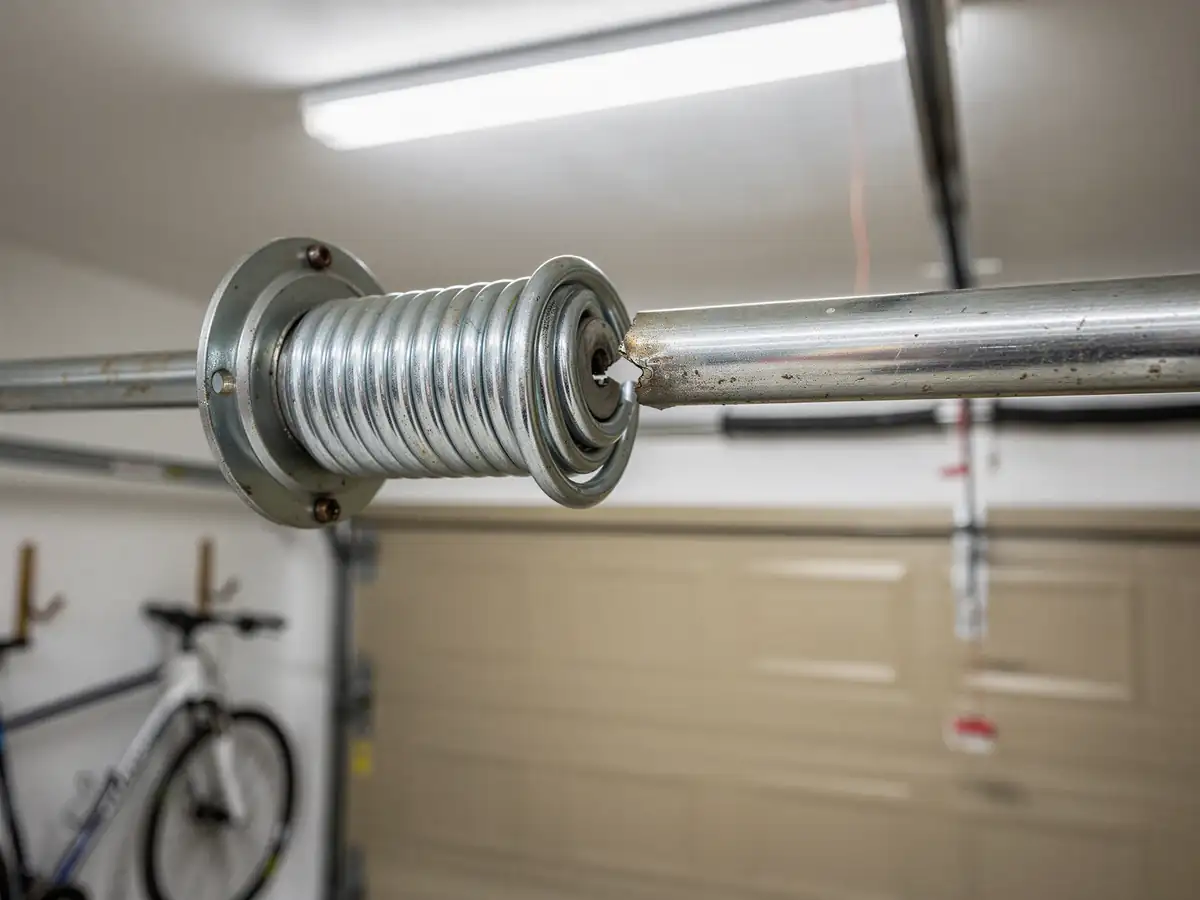
A steel panel built in 1991 has gone through three decades of freeze-thaw cycling, de-icing salt tracked in on tires, and winter nights that shrink steel and crack old vinyl weatherstrip. A torsion spring rated for 10,000 cycles doesn't care how old your house is, but cold makes the steel more brittle when it finally lets go. None of this means a 1990s door is junk. It means the decision to fix it has to account for what three decades in this climate actually did to the hardware, not just how the door looks from the driveway.
Checking It Yourself
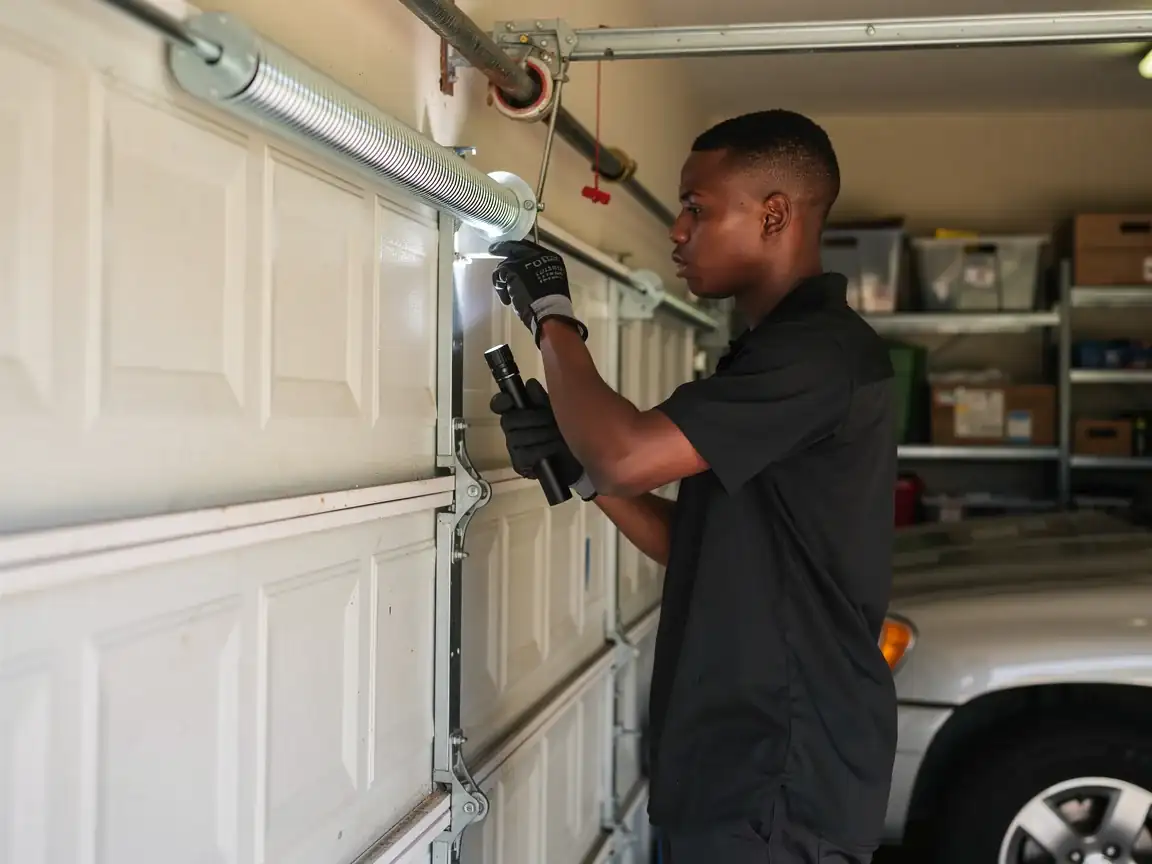
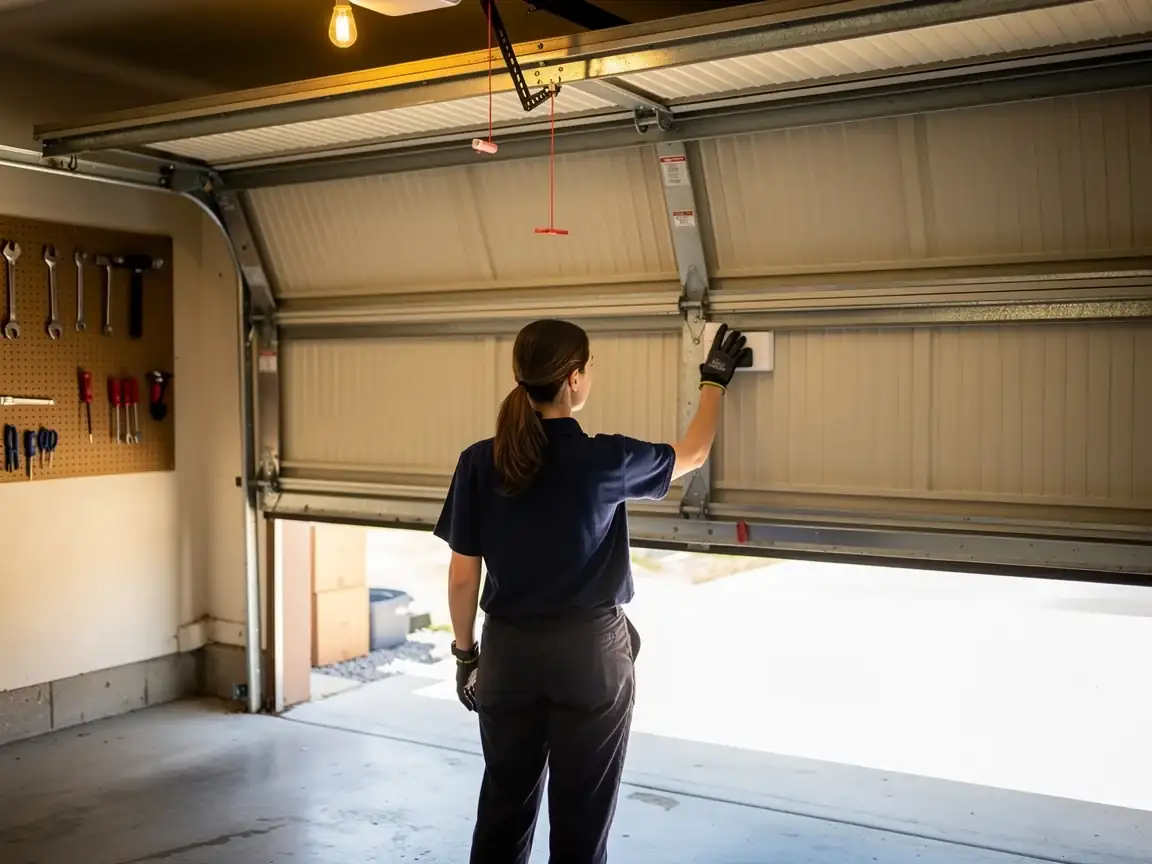
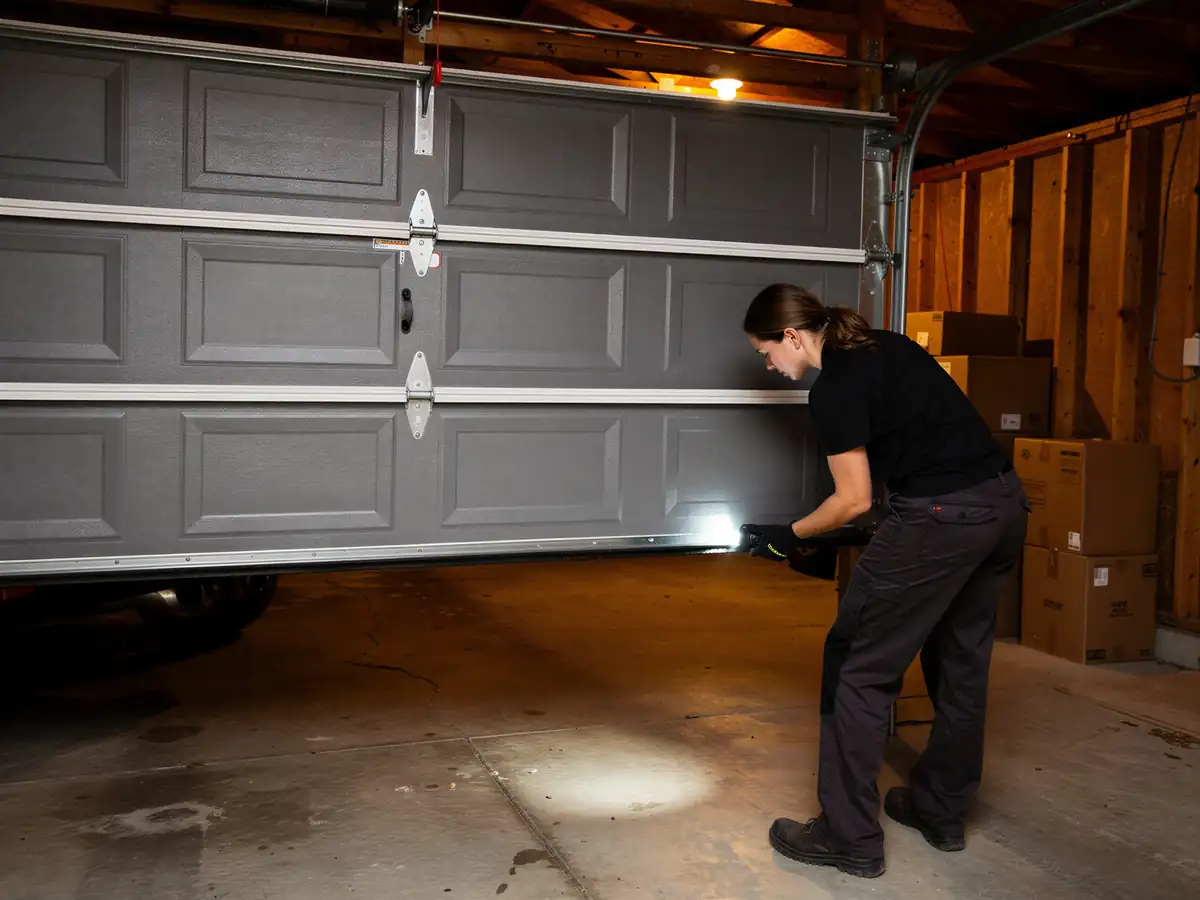
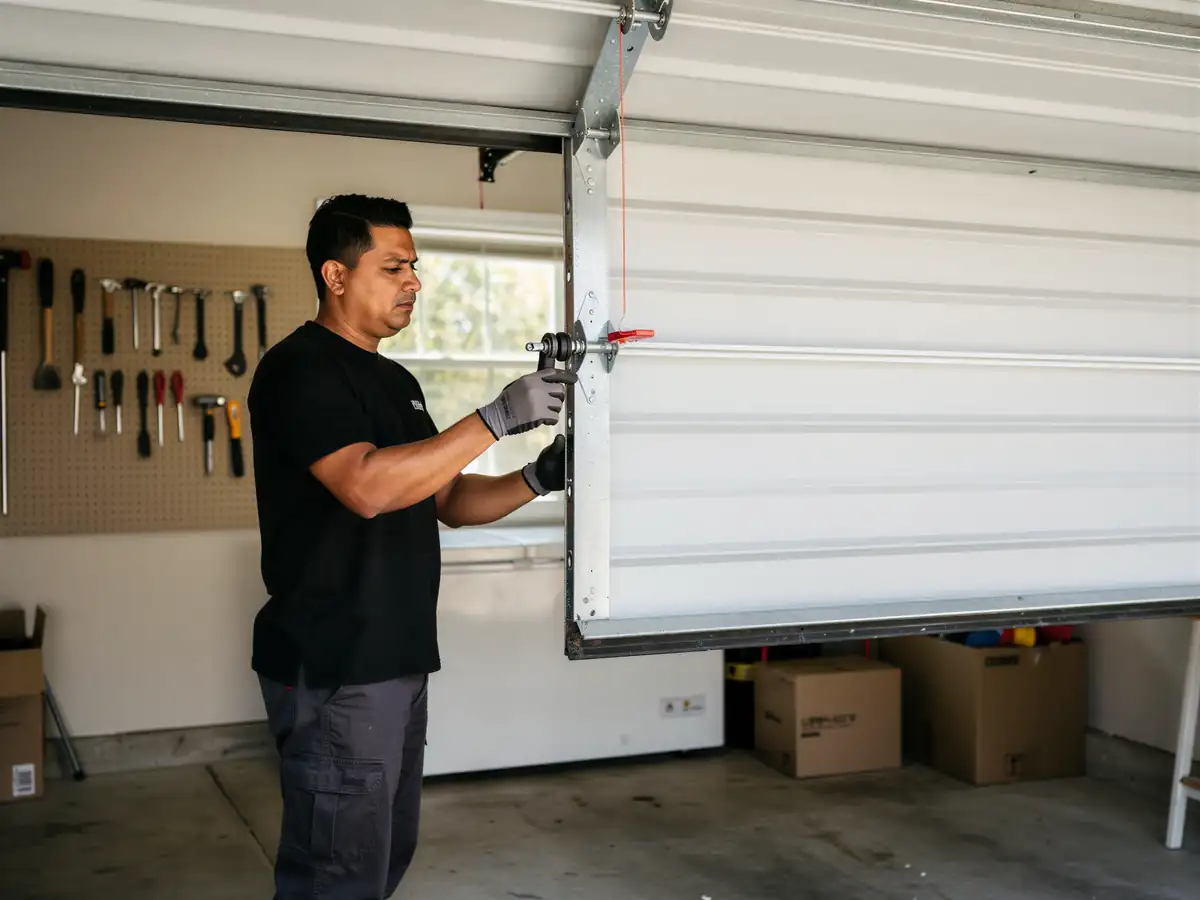
Before you call anyone, open the door by hand with the opener disconnected. If it's heavy, uneven, or wants to drop on one side, a spring from the original install is losing tension - common on doors from the 80s and 90s stock common across this area. Look at the tracks for rust pitting at the bottom few feet, where winter slush sits longest in a cold-severe climate like this one.
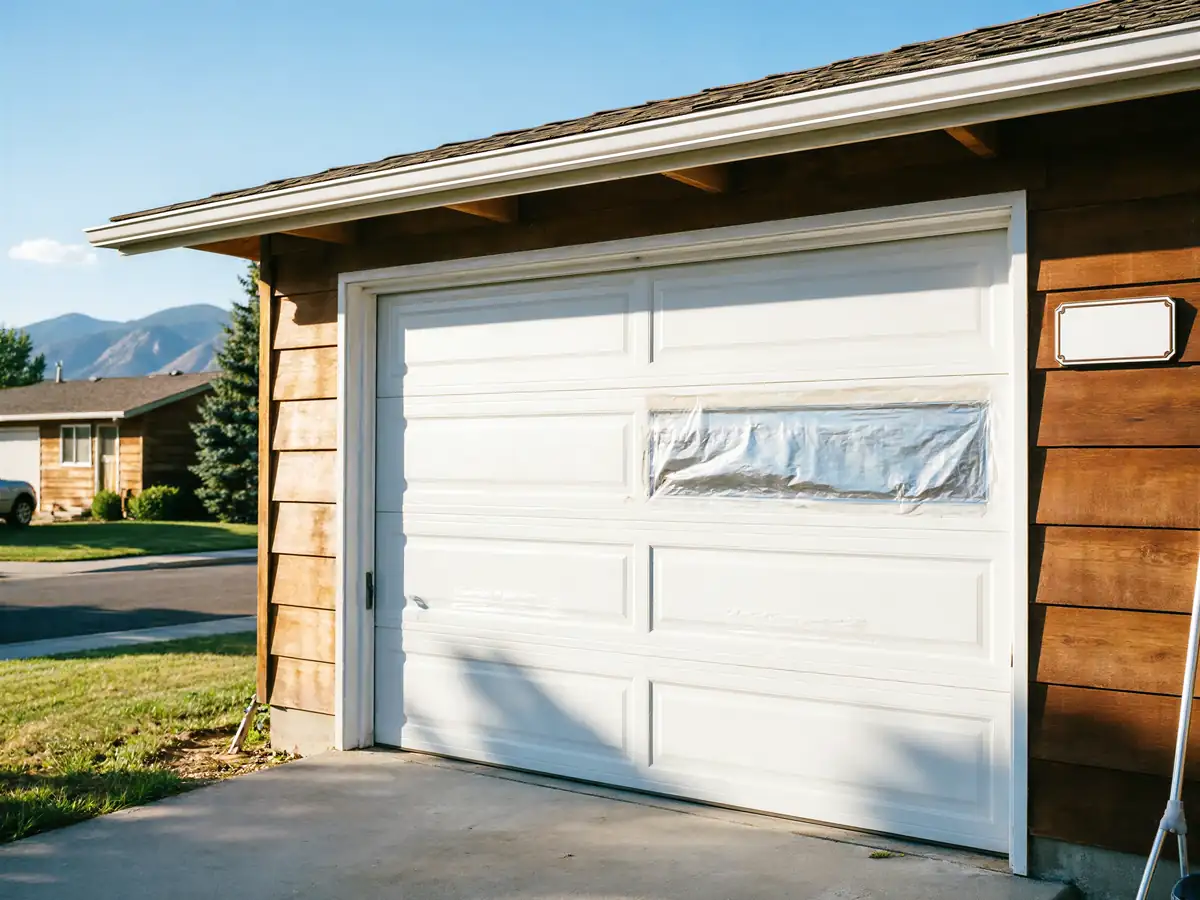
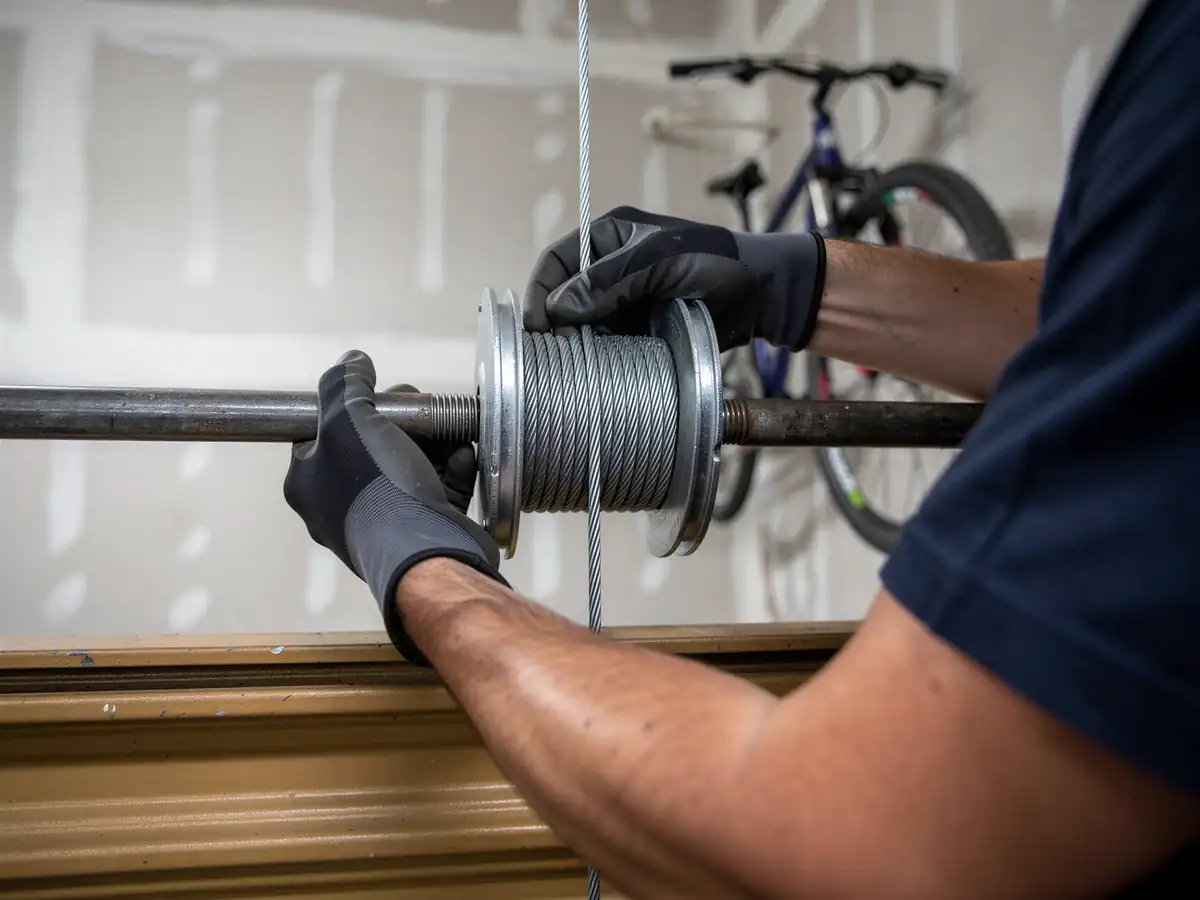
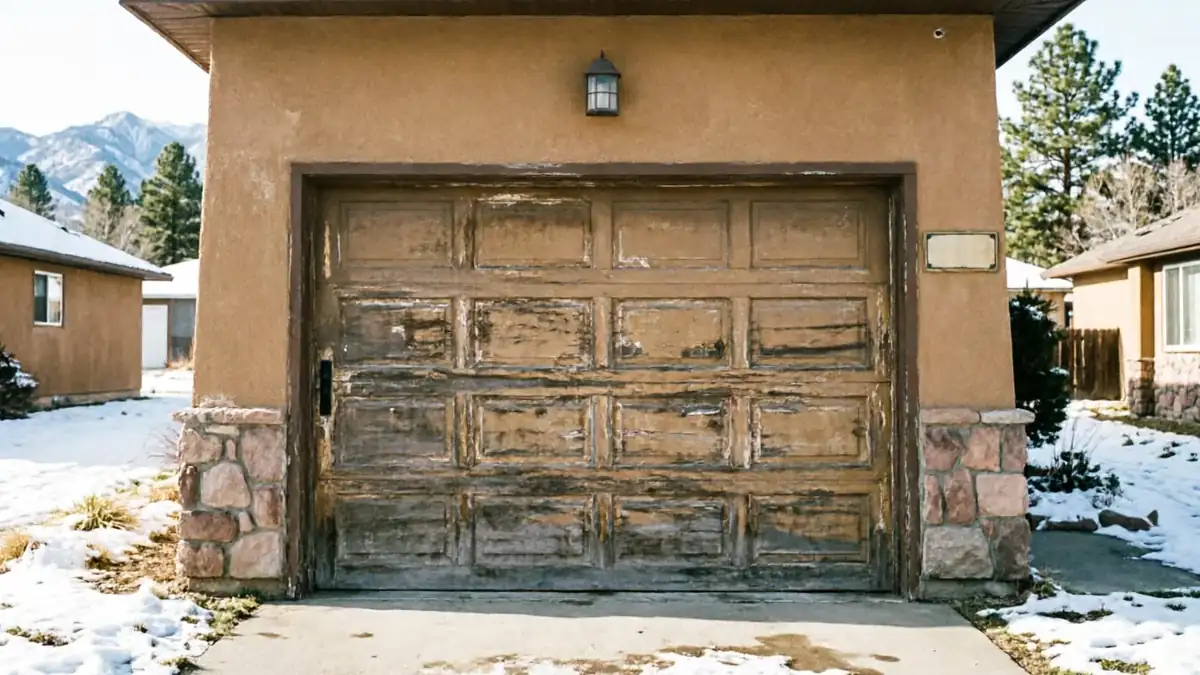
Check the panels for delamination or rust-through at the bottom corners, especially on steel doors with foam-core insulation from that era - the foam traps moisture against the steel from the inside. Spin the rollers by hand. If they're the original nylon rollers from a 1990s build, they're likely dry, flat-spotted, or cracked by now.
One honest limit here: a visual check tells you a lot, but it won't catch a spring that's about to fail or hardware that's been quietly corroding behind a panel. If the door is hard to lift, don't force it open and shut repeatedly - that's how a weak spring finishes failing while someone's hand is near it.
Season by Season
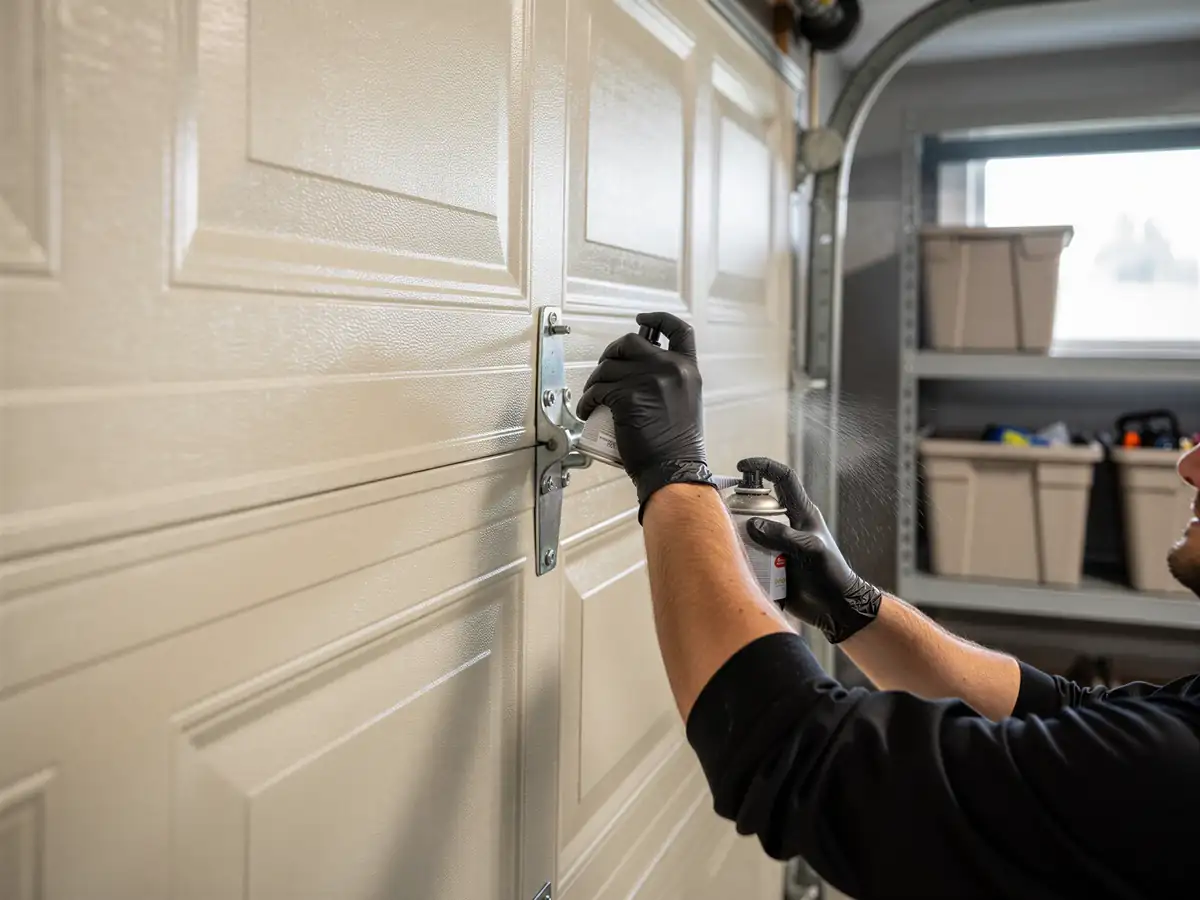
Winter is when a cold-severe climate like this one finds every weak point. Steel contracts, grease stiffens, and a spring that was marginal in October snaps in January when the opener asks it to lift a door that's heavier than it should be. This is also when original weatherstripping from a 1980s or 90s install finally cracks all the way through and lets cold air and moisture into the garage.
Spring and summer bring a different stress: temperature swings expand and contract the track bolts and header bracket, loosening hardware that's been in place since before 2000 on the older end of this housing stock. Heat also softens old foam-core insulation and accelerates rust once moisture gets behind rusted spots.
Fall is the practical window to deal with any of this. Parts and schedules are less stretched than in the dead of winter, and a door that needs new rollers, cables, or a spring can get sorted before the cold-severe season puts it to the real test.
The Problem
The honest answer is that a lot of doors from this era aren't worth fixing piece by piece
If a steel door from the 1980s or 90s has rust-through at the bottom panel, a cracked frame, and an opener that's already been replaced once, patching springs and rollers on it is money spent on a door that's still going to look and perform like it's 30-plus years old.
With median household income across the service area at $115,335
And 167,938 owner-occupied houses among the 327,418 households here, replacing rather than endlessly patching an older door isn't the financial stretch it might be in a lower-income area - it's often the more sensible call once you add up repeated hardware repairs.
- 167,938 owner-occupied
- 327,418 households
Where we draw the line
A single failed spring, a bent roller track, or worn cables on a door with sound panels is almost always worth fixing. A door with rusted-through panels, a warped frame, or an opener and springs that are both failing at once usually isn't. We won't talk you into a repair that's just delaying a replacement by a year.