West Jordan's 1980s-90s housing stock and cold winters push garage door tracks out of alignment in specific, predictable ways. Here's what to check before you call.
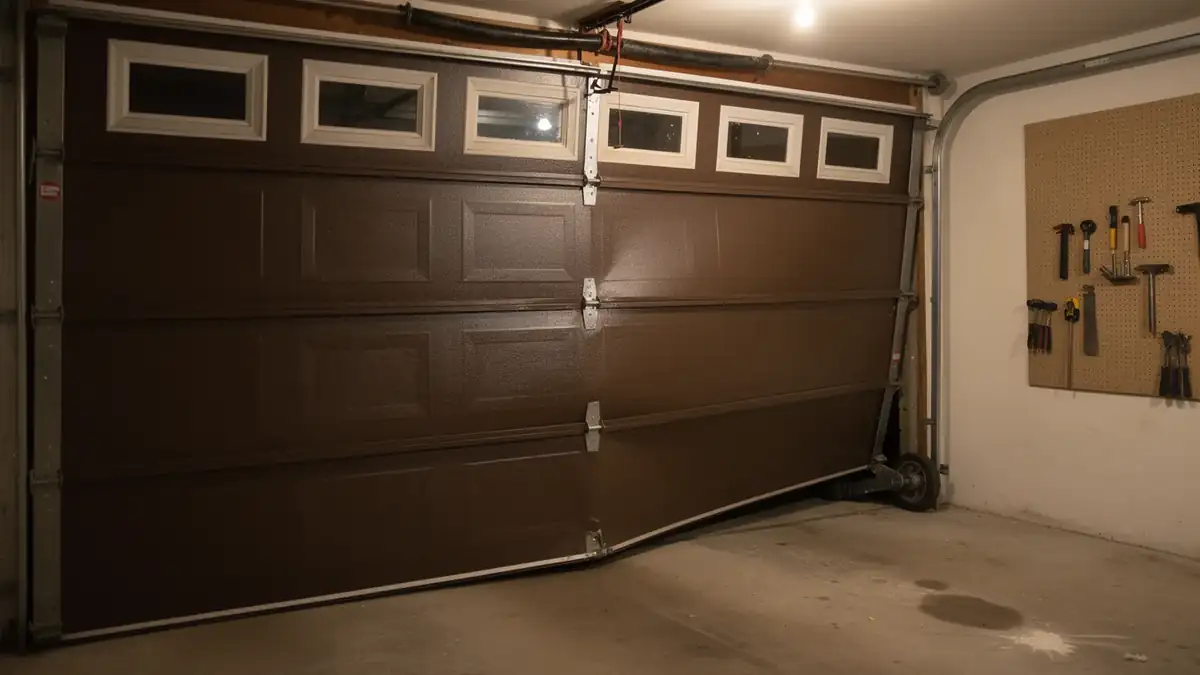
Most of West Jordan's housing went up between 1969 and 2012, with the bulk of it concentrated in the 1980s and 90s build boom across the neighborhoods here. That matters for tracks because the galvanized steel track hardware from that era was built to a standard that didn't anticipate 30+ years of freeze-thaw cycling. West Jordan sits in a severe cold climate band, and track brackets mounted to original studs loosen over decades of wood contracting and expanding with temperature swings. When a bracket backs out even an eighth of an inch, the track bows outward under the weight of the door, and the rollers start riding the edge instead of the channel. On a door installed in 1985 or 1992, that bracket has had a lot of winters to work itself loose. It's not a defect - it's just what happens to that generation of hardware this far along.
Checking It Yourself
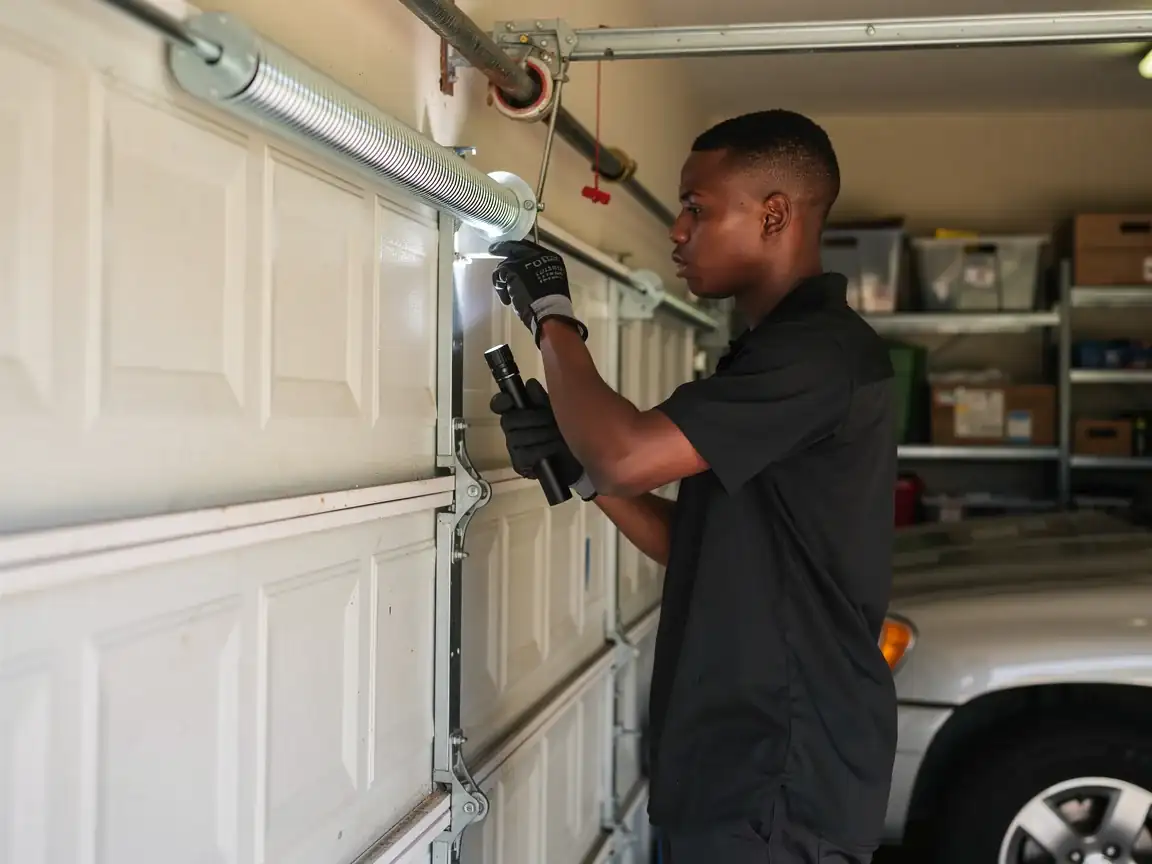
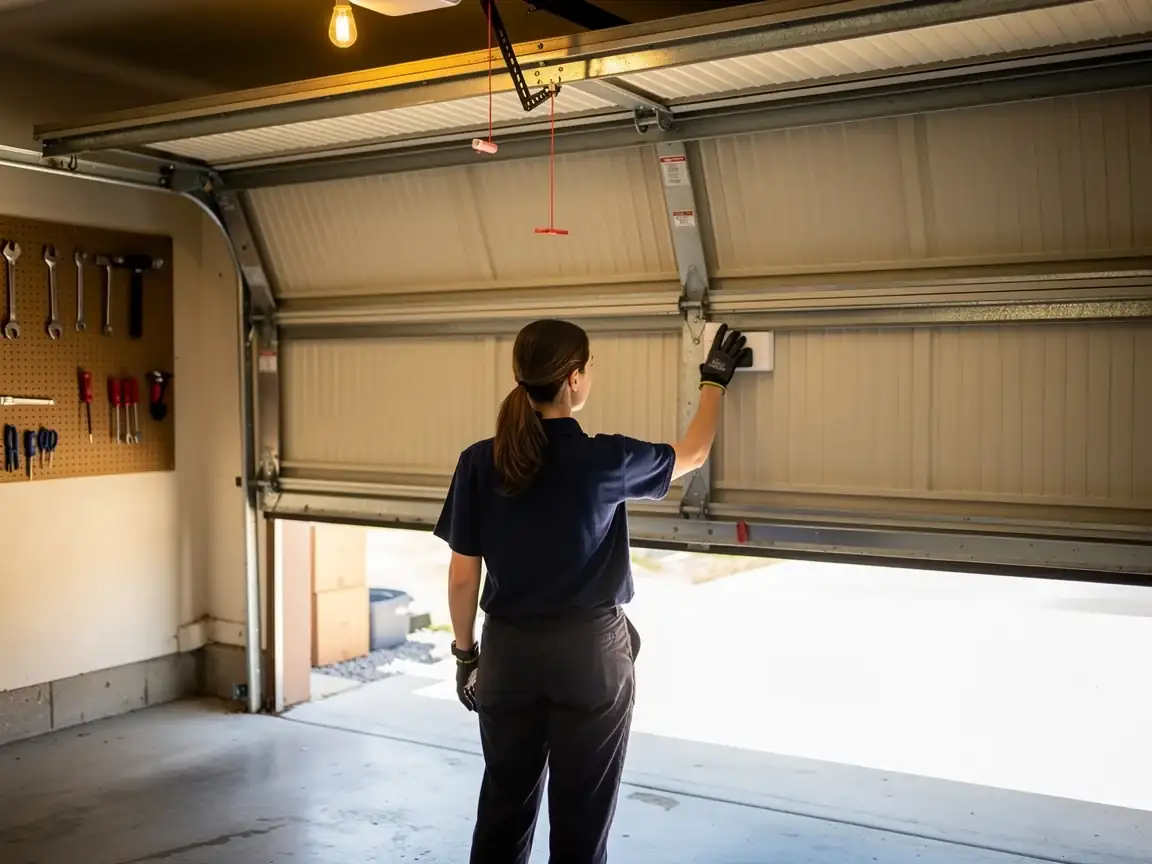
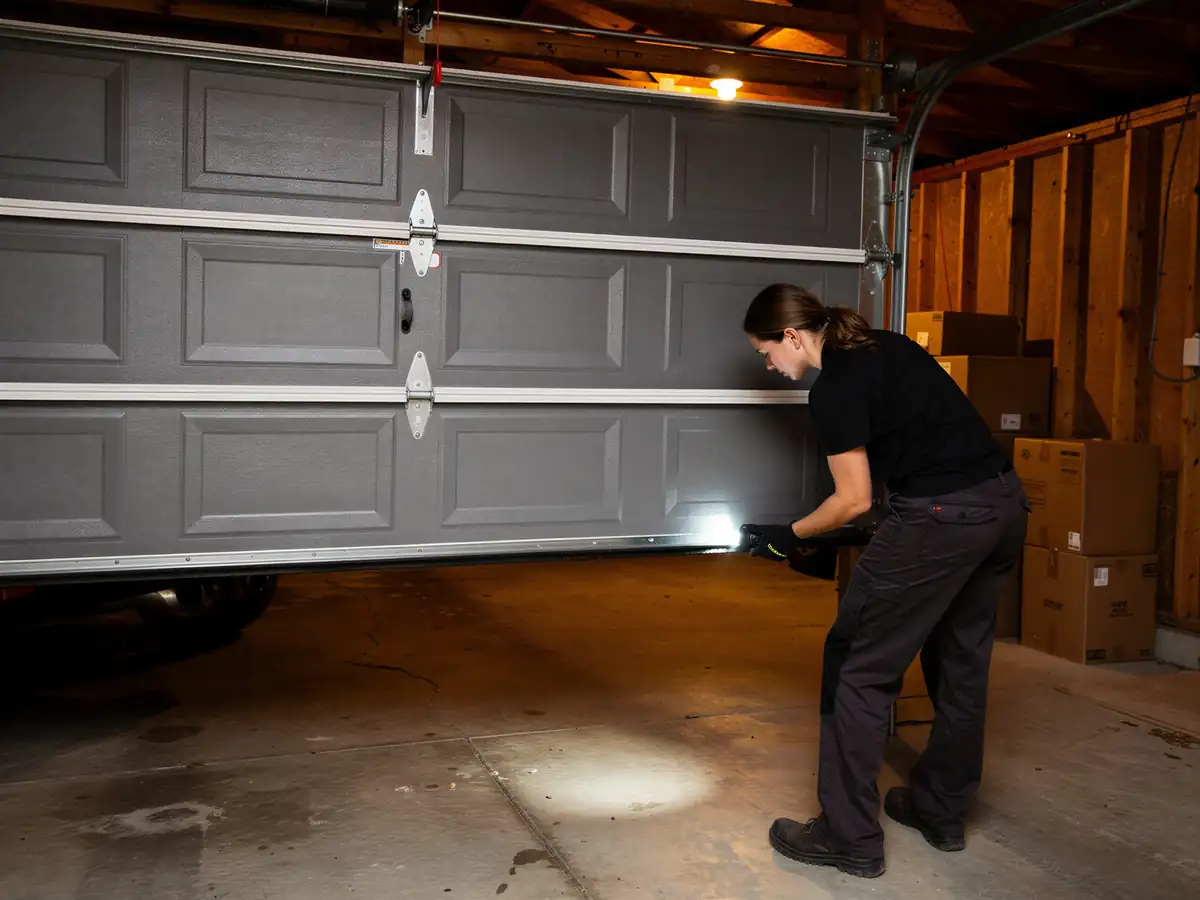
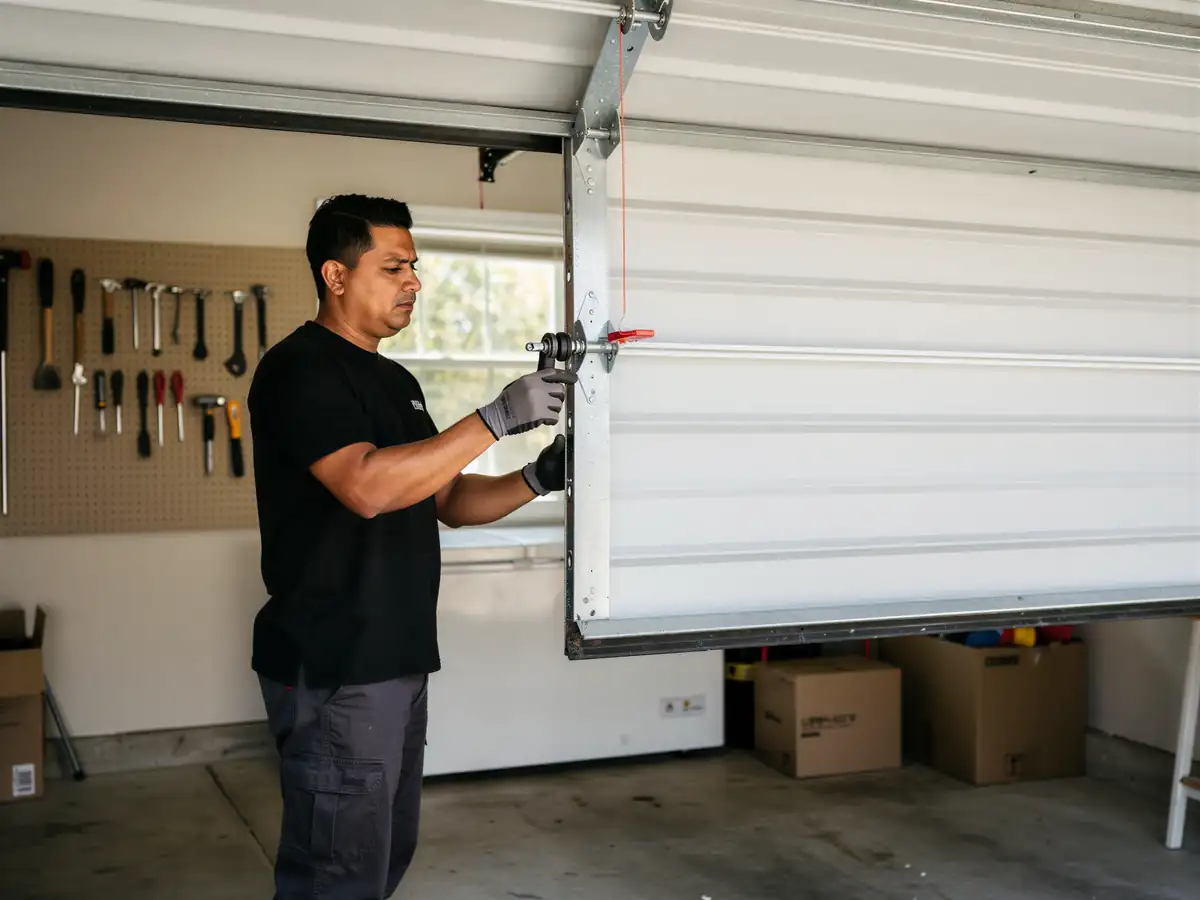
Look at the vertical tracks on both sides of the door where they bolt to the framing. On homes from the 1980s-90s stock common here, the lag screws often sit in the same pilot holes the original builder used, and those holes widen over time. Grab the track with both hands, about shoulder height, and pull toward you. Any movement more than a sixteenth of an inch means the bracket is working loose, which is the single most common cause of a track pulling away before the door jumps it entirely. Also check where the horizontal track meets the vertical section - that joint is bolted, not welded, on nearly all builder-grade installs from this period, and a loose joint bolt lets the whole track rack sideways under cold-stiffened spring tension. If you see daylight at that joint, stop running the door until it's tightened.
Season by Season
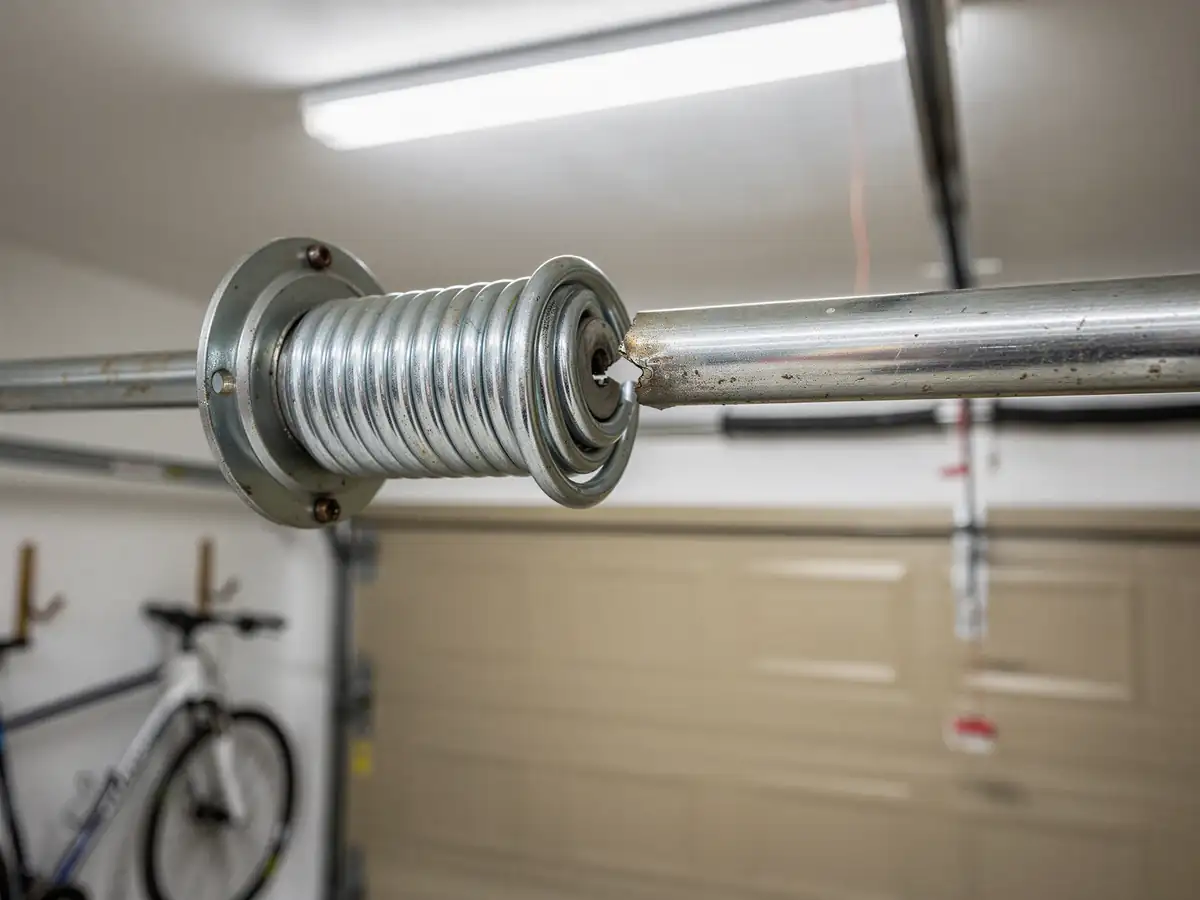
Cold hits track alignment hardest here, not heat. When temperatures drop hard in winter, the steel in the track contracts slightly and springs stiffen, which means more force gets transferred into every bracket and joint on the first cold-snap openings of the season. A track that's been marginal all fall will often fail in the first real cold week, not gradually. In spring, as the ground around the slab and footings shifts with the thaw, door frames in older West Jordan construction can rack slightly out of square, which throws off the parallel gap between the two vertical tracks. A gap that's uneven by more than a quarter inch top to bottom is enough to make rollers bind on one side and skip the track on the other.
The Problem
Once a track is bent or a bracket is loose, tightening it back down is sometimes enough - but not always, and that's the part worth being honest about. If the track itself has a kink in the rail from a roller that already jumped it once, bending it back rarely holds; the metal has a memory and it'll bow again under load within a few months. At that point replacing the track section costs less in callbacks than repeated field-straightening. We don't push full track replacement on every call - most loose-bracket jobs get resolved in one visit with lag screws and realignment. But if you've already had a door jump the track more than once, that's usually a sign the track itself is done, not just the hardware holding it.
Straight answers about garage door repair in West Jordan. Still unsure? Ask us directly.
Why did my garage door suddenly jump the track in cold weather?
Cold stiffens the torsion spring and contracts the steel track slightly, which puts more stress on brackets and joints that were already marginal. In West Jordan's severe cold winters, a bracket that's been loosening for years often fails on one of the first hard cold-snap openings rather than failing gradually.
Is a bent track always a full replacement?
No. If the bend is minor and the roller hasn't jumped the track yet, straightening and re-securing the brackets often fixes it. Once a roller has actually jumped the rail and kinked it, the metal usually won't hold a bend-back repair long term, and replacing that track section is the more durable fix.
My house was built in the 1980s - is that relevant to track problems?
Yes. A lot of West Jordan's housing dates to the 1980s and 90s building boom, and the track hardware from that era was lag-bolted into framing that has had three-plus decades of freeze-thaw movement. Loose brackets from aging pilot holes are one of the most common causes of track misalignment we see in houses from that period.