Why It Happens Here
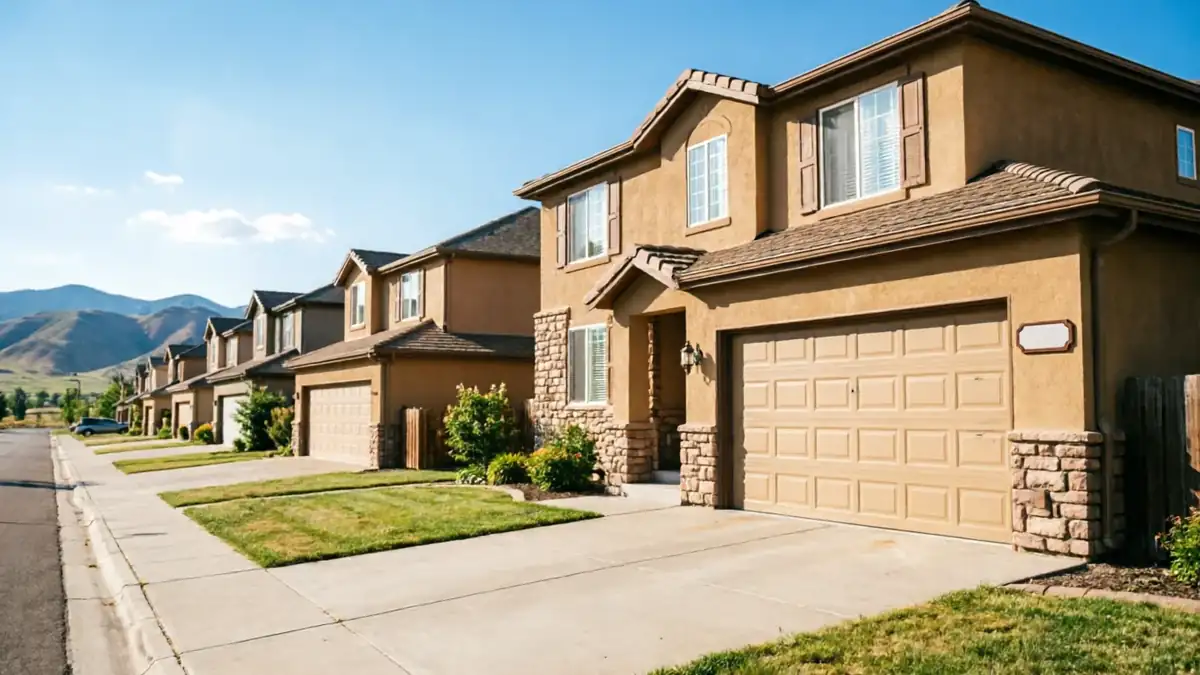
Taylorsville's housing stock centers on 1981
Noticeably older than the broader service area, where the median build year sits closer to 1999. That gap is the whole story. A door hung in 1981 has had over forty years to wear through its original torsion spring, its original bottom brackets, and in plenty of houses, its original chain-drive opener. Across this town's roughly 20,349 households, a large share never had that hardware replaced - only lubricated, tightened, or ignored until it failed outright.
- 20,349 households
The service area as a whole falls in a cold, severe climate band, and Taylorsville sits inside that same band
Cold doesn't create the wear, but it exposes it: a spring that's already lost tension from four decades of cycling snaps faster once the steel contracts in a hard freeze. Same goes for stiff grease in an original opener gearbox. None of this is damage you can see from the driveway. It shows up as a sudden bang, a door that won't budge, or a motor that hums and goes nowhere - on hardware that was due for replacement a long time before the cold made the decision for you.
What It Costs
We don't have a Taylorsville-specific price sheet to quote on this page, and we're not going to make one up. What we can tell you is that the job in a 1981-built house usually isn't a simple adjustment - at that age, a spring call often turns into a spring-and-cable call, or a cable-and-roller call, because the parts share the same wear clock. If your opener is also original, expect the tech to flag it separately rather than bundle a guess into the spring price.
The honest limitation here: we can't give you a number without seeing the door. Spring sizing, cable gauge, and bracket condition vary even within houses built the same year, and quoting blind on forty-year-old hardware is how companies end up back at your house a second time. A tech from West Jordan will look at the actual door and price the actual repair, not a generic one.
How Long You Are Without the Door
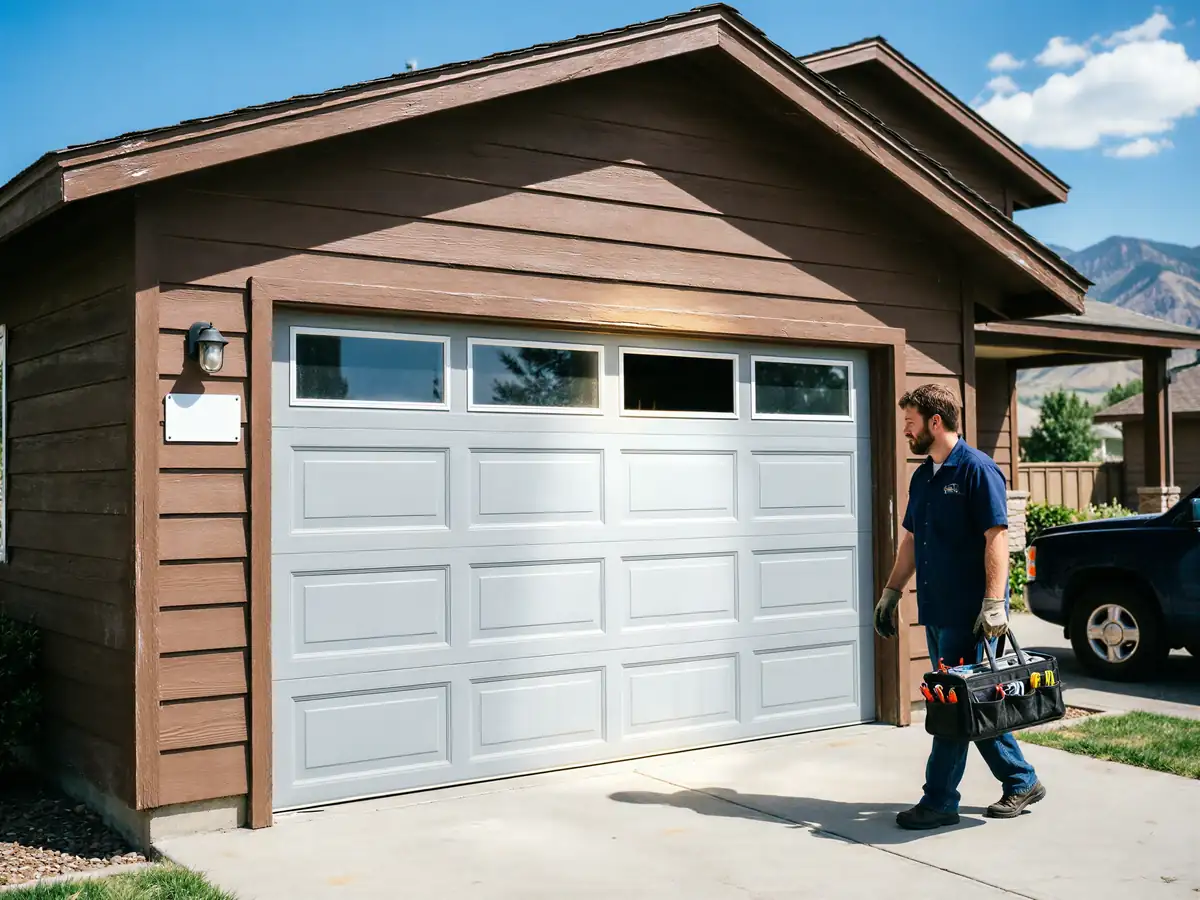
We run this call from West Jordan, about 5 miles away, so there's no local branch sitting around the corner - just a truck that drives in. On a standard broken-spring or cable job, most of the time on site goes to the repair itself, not the drive.
Where it can run longer is parts. If your opener or spring size is the original 1981 configuration, that's not something every supplier stocks on the shelf today, and a tech may need to source a matching part rather than install whatever's closest. That's a sourcing delay, not a mystery - and it's the kind of thing worth asking about up front rather than finding out after the truck's already on your street. We're not going to promise a same-day fix on hardware we haven't seen.
How It Shows Up
In a house from 1981, the failure pattern is pretty consistent
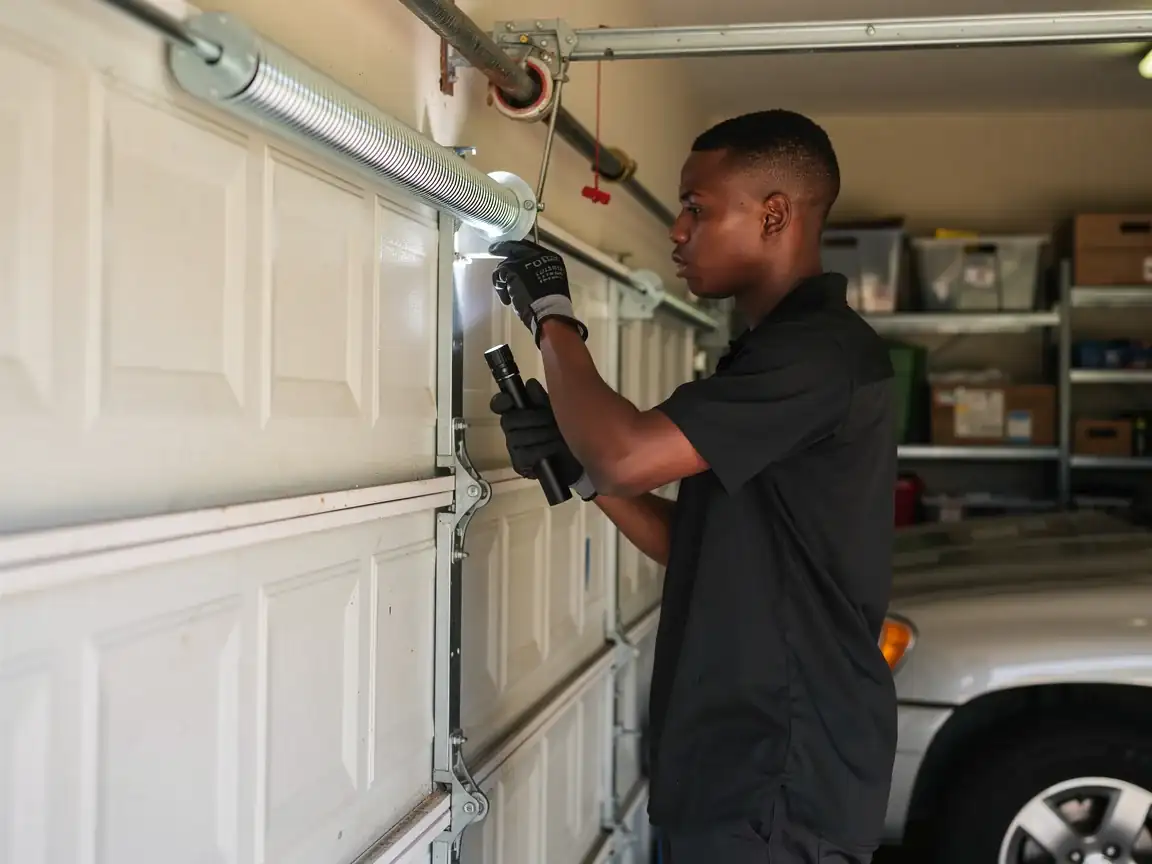
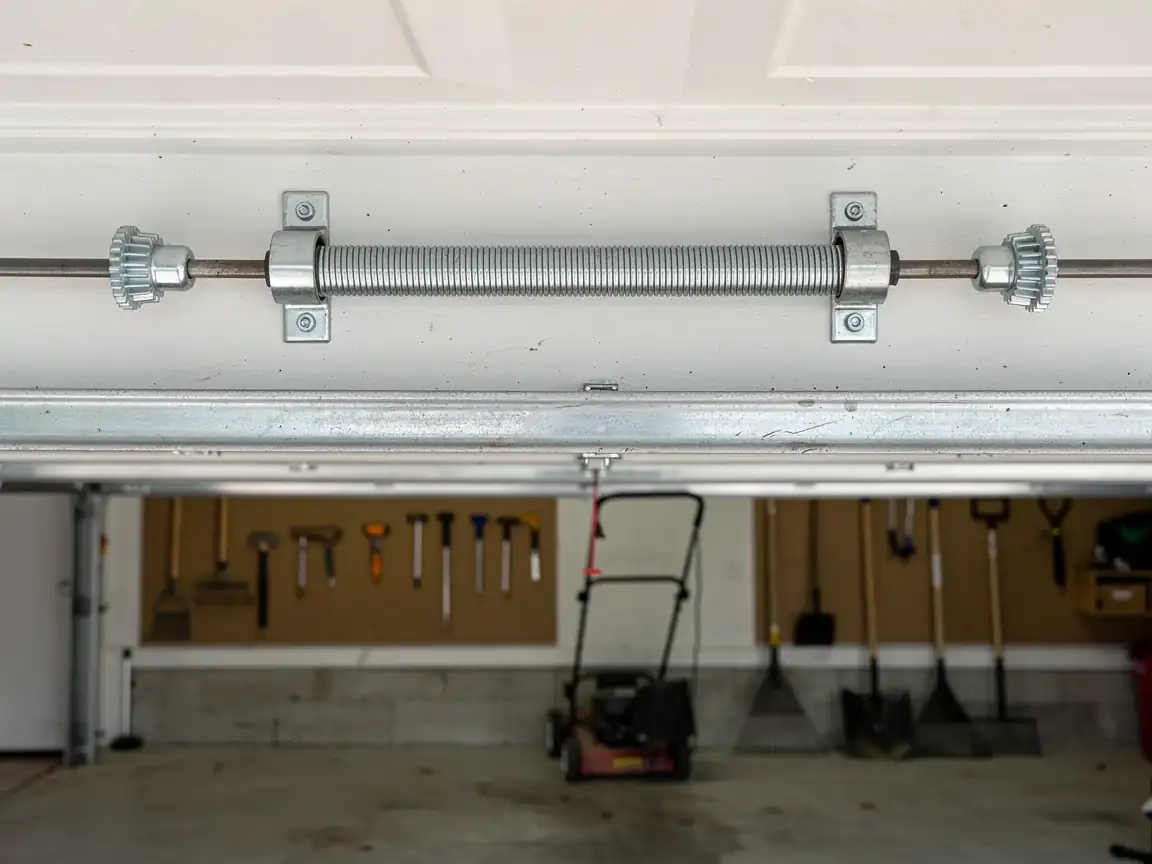
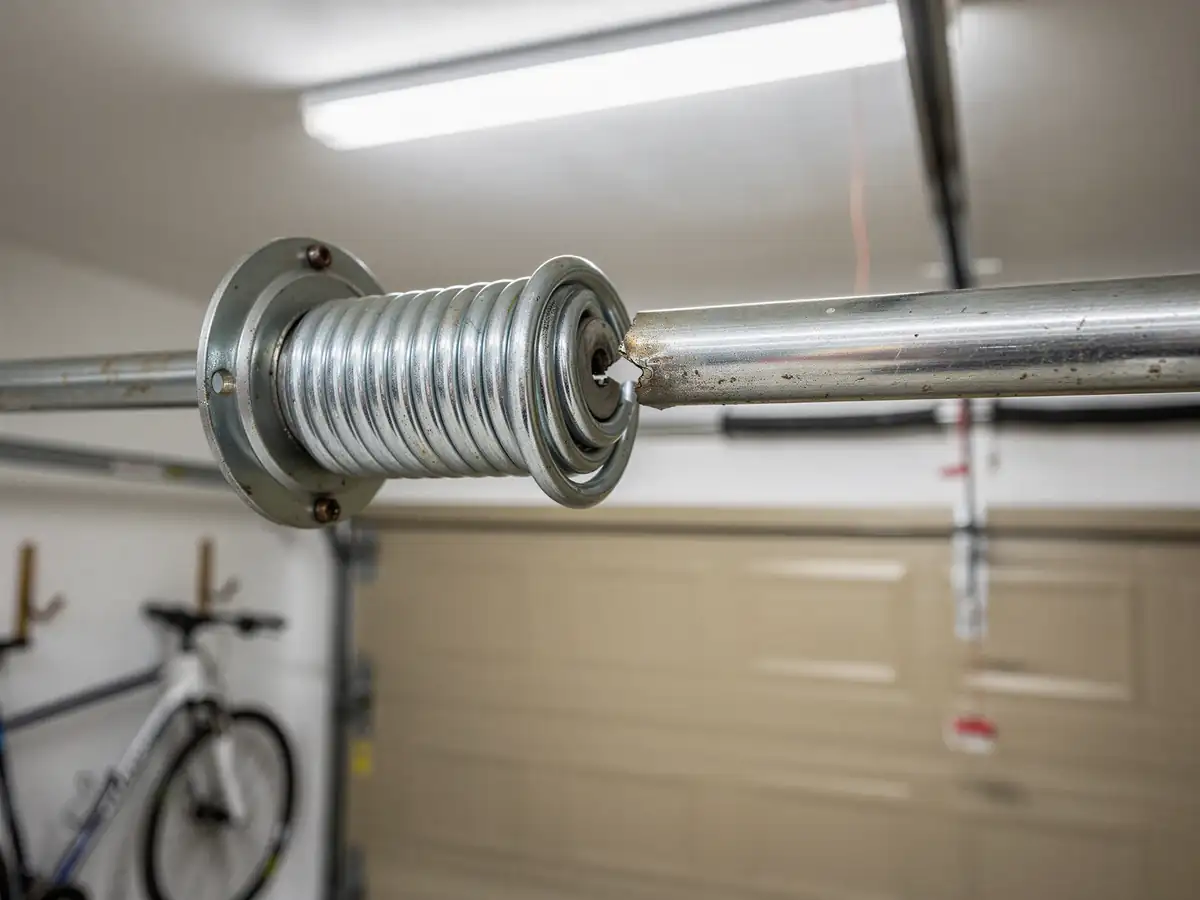
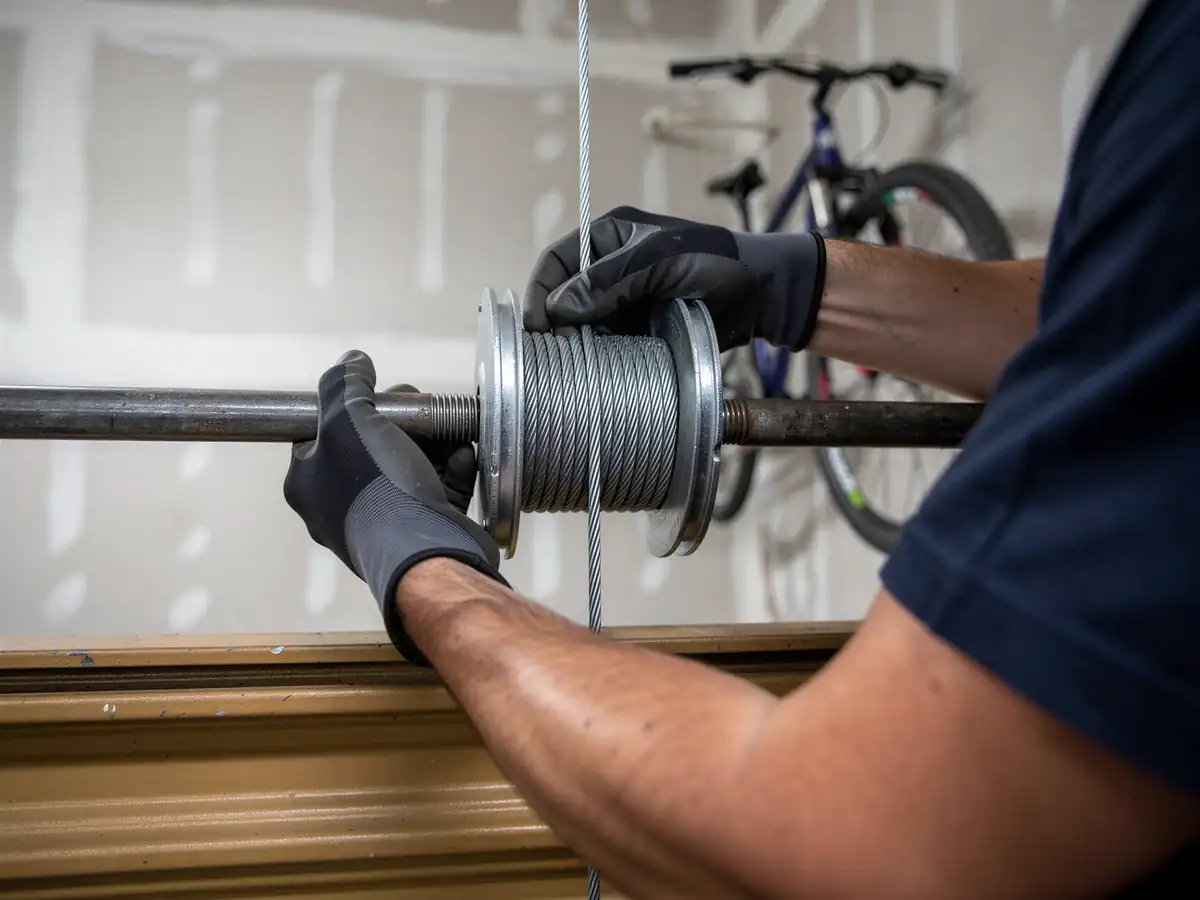
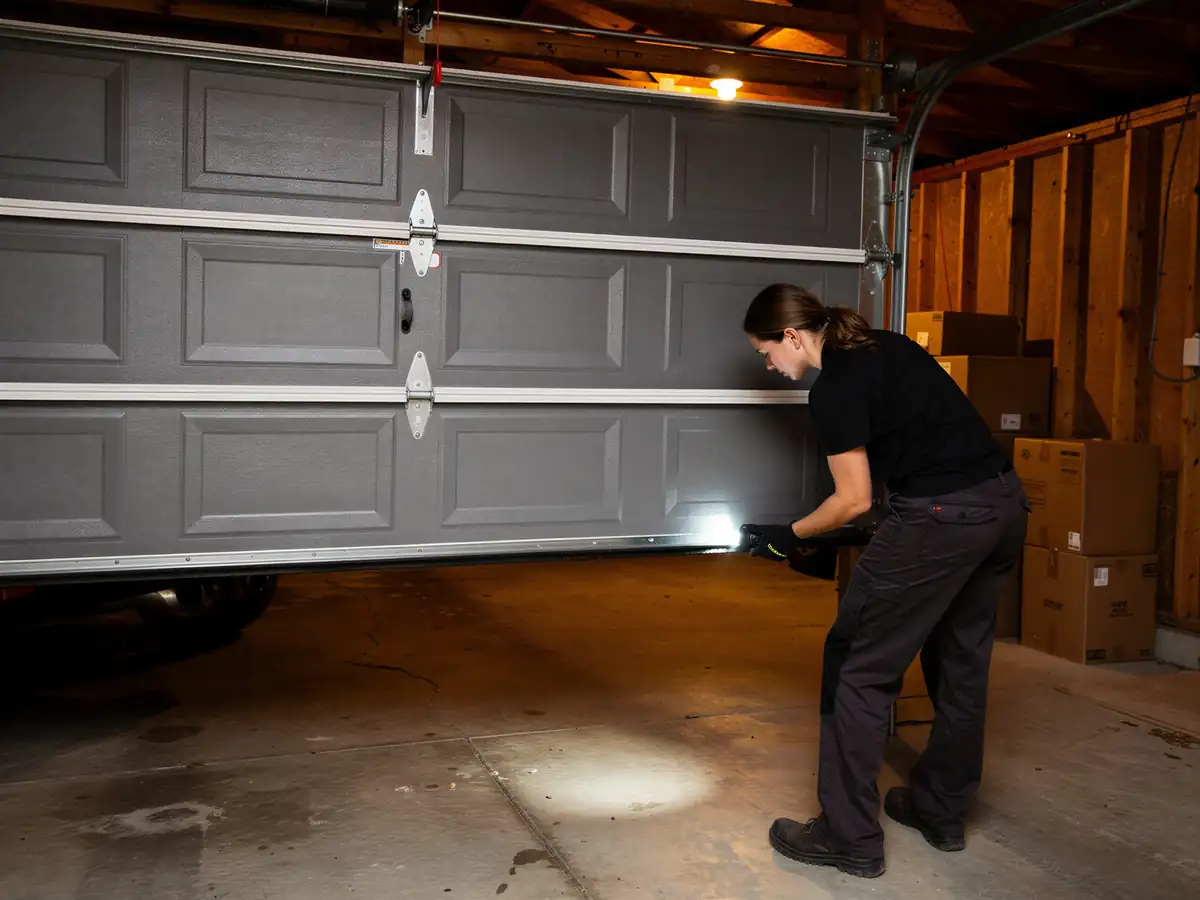
The torsion spring goes first - a loud bang from the garage, then a door that's suddenly too heavy to lift by hand or by motor. Sometimes it's slower: the opener strains harder each week, the door closes crooked, or one side drops faster than the other because a cable on that original bracket has frayed through.
Cold snaps move the timeline up
A spring that still had a little life left in October can snap in January once the steel loses flexibility, and an original chain-drive opener with forty-year-old grease in the gearbox will groan before it quits outright. None of this means the whole door needs replacing - a lot of these calls end with a spring and cable swap, not a new door. But it does mean that in a town where most garages are still running what went in with the house in 1981, age is doing most of the damage, and the cold just picks the day.